Principles, Theories & Moral Reasoning
Lecture 1 · Part A — The Four Principles and How to Read an Argument
Brendan Shea, PhD
An Introduction to Bioethics.
A Case to Open With
A Card in Her Wallet
A 34-year-old woman is brought in after a high-speed crash. She was awake and talking at the scene. Now she is pale and drifting — she opens her eyes when you say her name, but cannot follow a question. A scan shows her spleen is badly torn and bleeding internally; she has lost close to half her blood in the last hour.
The surgeon wants to operate now, with donated blood on the way in. In her wallet is a card, signed and dated: she is a Jehovah’s Witness and refuses all blood products. Her parents say she is not thinking clearly and would never have wanted to die like this. You are the nurse at her bedside.
- What would you want to know before doing anything?
- Who is asking you to do what?
- What is the right move here — and why?

In chart shorthand: a grade IV splenic laceration, hemoglobin down from 13 to 7 in an hour. Translated — a deep tear in the spleen, and a blood count that has fallen by nearly half in the time you have been on shift.
After You’ve Discussed
Note
Two questions are tangled together here. May a person refuse a transfusion? That one is close to settled: U.S. courts have almost always upheld a competent adult’s refusal, even a fatal one. Is this her refusal? That is not settled at all. In an emergency a team may treat without consent, on the presumption that people want to be saved — and a card like hers exists precisely to rebut that presumption in advance.
Capacity is also not something a person simply has or lacks. It is specific to one decision at one moment, and it can drain away with a blood pressure and return after surgery. Minors and pregnancy are the other two places the law gets hard; we return to all three later in the course.
Don’t try to settle this yet. The rest of the lecture is, in a sense, equipping you to answer it more carefully than “follow your gut.” Write down your first instinct now, and check at the end of the chapter whether it moved.
Today — Foundations
By the end of Part A, you will be able to:
- Define bioethics and explain why it emerged as a distinct field
- Place bioethics on the map of ethics: descriptive, metaethical, and normative (theoretical vs. practical)
- Distinguish ethical claims from legal, religious, and personal-preference claims
Today — The Toolkit
You will also be able to:
- Explain the four principles as an explication of common morality
- Balance and specify principles — and say when one may override another
- Diagnose the source of a moral conflict, and tell a moral conflict from a moral dilemma
- Identify premises, conclusions, hidden assumptions, and common fallacies
What Is Bioethics?
A Working Definition
Bioethics is the systematic study of ethical questions arising in:
- The care of patients (clinical ethics)
- Biomedical research on humans and animals (research ethics)
- Public health policy and the allocation of scarce resources
- New biotechnologies — genetics, AI, reproductive technology
“Systematic” is the load-bearing word. Bioethics isn’t just having opinions — it’s reasoning about them in a way others can examine, challenge, and refine.
Why a Distinct Field?
A short list of mid-20th-century shocks:
- The Nazi medical experiments exposed at Nuremberg (1945–1947)
- The Tuskegee syphilis study (1932–1972), in which Black men were left untreated for decades
- New technology that outran old norms: ventilators, dialysis, organ transplants, IVF
- Patients and families demanding a voice the old paternalistic model didn’t give them
Bioethics is what grew up to answer the question: how should we govern this?
Three Sample Questions
- Clinical: Can a 16-year-old refuse chemotherapy her parents want her to have?
- Research: Is it ethical to give half the participants a placebo when an effective drug already exists?
- Policy: When ICU beds run out in a pandemic, who gets one?
Notice the scales. Same field, three very different sizes of question — one bedside, one study, one society. Keep asking which scale a problem lives on; it often decides which principle carries the most weight.
Three Kinds of Ethical Inquiry
Where Bioethics Sits
“Ethics” names three different activities, not one:
| Branch | The question it asks | How it works |
|---|---|---|
| Descriptive ethics | What do people actually believe and do? | Surveys, history, sociology, psychology |
| Metaethics | What are moral claims — true? objective? just feelings? | Conceptual and logical analysis |
| Normative ethics | What ought we to do, and why? | Reasoned argument, principles, theory |
Bioethics draws on all three — but its central job is normative.
Descriptive and Metaethical Questions
Descriptive ethics — the empirical study of moral belief and behavior. It reports; it does not prescribe.
- Example: “In one survey, most ICU nurses reported moral distress about treatment they considered futile.” A fact about attitudes — not yet a claim about what is right.
Metaethics — steps back to ask about morality itself.
- Example: “When we say ‘this is wrong,’ are we stating a fact, expressing a feeling, or applying a shared standard?”
Note
Bioethics uses descriptive facts (you cannot weigh a harm you have not measured) and usually brackets metaethics — clinicians must act before philosophy settles whether morality is “objective.”
Normative Ethics: Theory and Practice
Normative ethics asks which actions, policies, and characters are right — and what reasons support that. It works at two levels:
| Level | What it does | Examples |
|---|---|---|
| Theoretical | Builds general accounts of rightness | Utilitarianism, Kantian ethics (Part B) |
| Practical / applied | Brings moral norms into a real domain | Bioethics, business ethics, environmental ethics |
- Bioethics is applied normative ethics: real cases, real decisions
- It still leans on descriptive facts beneath it and moral theory behind it
- Most of this course lives here: what should we do for this patient, this study, this policy — and why?
Ethics, Law, Religion, Preference
Why the Distinctions Matter
It is easy to confuse ethical, legal, religious, and preference claims. They often point the same direction, and in ordinary speech we slide between them without noticing. They are importantly different, and telling them apart is one of the first skills bioethics asks for.
| Type of claim | Source of authority | Question it answers |
|---|---|---|
| Ethical | Reasons we can examine and share | What ought we to do? |
| Legal | Statutes, courts, regulators | What may or must we do under law? |
| Religious | Sacred texts, traditions, communities | What does this faith require? |
| Preference | Personal taste | What do I happen to want? |
Ethics vs. Law
The law is not a reliable guide to what is ethical.
- Slavery in the United States was legal until 1865 — and was monstrously unethical the entire time.
- The Tuskegee study was legal in 1932. It was wrong in 1932.
- Conversely, jaywalking is illegal in most cities; almost no one thinks it is a moral failing.
Tip
A useful test for nurses: “Is it legal?” and “Is it the right thing for this patient?” are two different questions. Sometimes the law lags behind ethics; sometimes it overreaches.
Ethics vs. Religion
Many of our patients — and many of you — draw moral guidance from religious tradition. That is appropriate. But:
- A religious tradition can give its members reasons to act, but cannot, on its own, give non-members reasons to act.
- Bioethical arguments need to work in a pluralistic society where patients, families, and clinicians come from many traditions and none.
We will treat religious commitments as important data about what patients value — not as conversation-stoppers in clinical reasoning.
Ethics vs. Personal Preference
“I just don’t think it’s right.”
That is a feeling, not yet an argument. Ethical reasoning asks the next question: why? What reason, that another reasonable person could weigh, supports the conclusion?
“I feel” and “I believe” are perfectly good starting points. Bioethics just asks for the next step: the reason someone who doesn’t share your feeling could still weigh.
Your Turn — Legal, Ethical, Neither
Come up with your own examples, not ones from these slides.
- Name something that is legal but you think is wrong.
- Name something that is illegal but not wrong.
- What is the law tracking in your examples, if not ethics?
Thought Question
A nurse on the L&D floor is asked to assist with a second-trimester abortion for a patient whose fetus has a lethal anomaly. The procedure is legal; her own physician is performing it. The nurse declines on religious grounds and asks to be reassigned. Her hospital has a conscience clause — a policy permitting clinicians to opt out of specific procedures — and she has invoked it formally.
- Is what she is doing legal? Ethical? Religiously required? A personal preference?
- Could the answers come apart? In what scenario?
- Now imagine the same refusal at 3 a.m. at a small rural hospital with no other nurse on shift. Anything change?
After You’ve Discussed
Note
Where the duty actually lands. Most U.S. conscience-clause laws place the duty to still care for the patient on the institution, not on the individual clinician. That shifts the question from “can she refuse?” to “what does the institution owe the patient when she does?”
The Four Principles
Beauchamp & Childress, 1979 — the working framework of clinical ethics for almost fifty years.
A Brief Origin Story
In the wake of Tuskegee, a U.S. national commission produced the Belmont Report (1979) (National Commission for the Protection of Human Subjects of Biomedical and Behavioral Research 1979). That same year, philosophers Tom Beauchamp and James Childress published Principles of Biomedical Ethics (Beauchamp and Childress 2019), proposing four principles meant to be:
- Shared across ethical traditions
- Specific enough to guide clinical decisions
- General enough to apply to new technologies
The result is what’s often called principlism — and it remains the lingua franca of hospital ethics consults (Jonsen 1998).
What the Principles Are Made Of
Beauchamp and Childress did not invent a new morality. They drew the four principles out of the common morality.
- Common morality — the basic moral norms that essentially all morally serious people already accept, across cultures and eras
- It is pre-theoretical: you do not need a philosophy course to know it
- It is shared ground: a Kantian, a utilitarian, and a religious believer mostly agree on it
I call it “fourth-grade morality” — the rules a thoughtful ten-year-old already follows.
“Fourth-Grade Morality,” Made Precise
Norms almost no one seriously rejects — and what each becomes in medicine:
| Rule a child already knows | In the clinic it becomes… |
|---|---|
| “Ask first; don’t push people around” | Autonomy |
| “Help people who are hurt” | Beneficence |
| “Don’t hurt people” | Non-maleficence |
| “Share fairly; no favorites” | Justice |
| “Don’t lie; keep your promises” | Truth-telling, consent, fidelity |
- The principles are an explication of this shared morality
- Explication = take a rough concept we already use and make it precise and usable — without replacing it
Why “Common Morality” Matters
- Authority — the principles are not two philosophers’ opinions; they restate what we already believe
- Reach — people who disagree about religion, politics, or theory can still share them
- Limits — common morality is general: “do no harm” does not tell you whether this risky surgery is a harm worth taking
Note
This is why the four principles are a starting point, not an answer key. The real work — coming next — is turning shared general norms into a decision in one specific case.
1. Autonomy
Autonomy — self-rule. Respect the patient’s right to make informed decisions about her own body and care.
In practice, autonomy underwrites:
- Informed consent
- The right to refuse treatment (even life-saving treatment)
- Truth-telling and honest disclosure
- Confidentiality
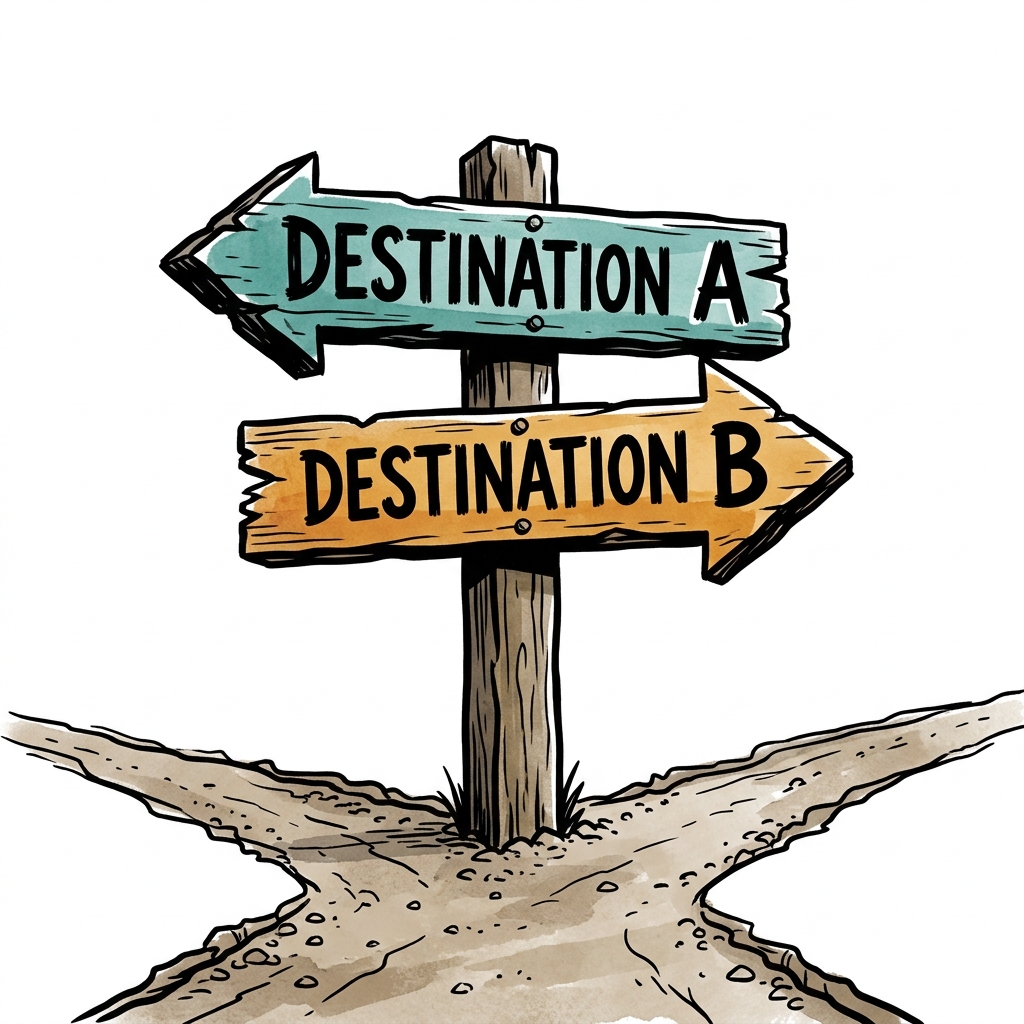
The transfusion-refusal case that opened this chapter is, at its core, an autonomy case — and a hard one, because the person whose autonomy is at stake cannot speak for herself right now. Hold that thought — you’ll meet it again in Chapter 2 and in the Dax Cowart case study.
Autonomy in Practice
Autonomy self-rule
The case. A 28-year-old with type-1 diabetes (A1c 11.2) declines an insulin pump for the third time. She is tired of being told what to do.
What respecting autonomy looks like here:
- Make sure she understands the risks — disclosure
- Assess decision-making capacity (she has it)
- Document clearly; continue to offer support without coercion
Autonomy is the floor. It does not require us to abandon her — only not to override her.
2. Beneficence
Beneficence — do good. Act in the patient’s best interest; promote welfare.
This sounds obvious until you ask: whose account of the patient’s good?
- The clinician’s professional judgment?
- The patient’s own values?
- The family’s hopes?
Then ask how many people’s good. Read narrowly, beneficence covers this patient; read broadly — as utilitarians do — it covers welfare in the aggregate, which is where public health and cost-effectiveness arguments get their force.
Beneficence and autonomy can pull in opposite directions.

Beneficence in Practice
Beneficence do good
The case. An 82-year-old with end-stage heart failure, fifth admission this year. The team recommends comfort-focused care; he wants “everything done.” His daughter asks the team to “talk him out of it.”
Whose idea of his good?
- The team’s clinical judgment about prognosis?
- His own stated wishes, formed over a long life?
- His daughter’s fear of losing him?
Beneficence is not the same as paternalism. It is the discipline of finding out what this person counts as a life worth living — and acting in service of that.
3. Non-Maleficence
Non-maleficence — first, do no harm (primum non nocere).
The oldest principle in Western medicine, traceable to the Hippocratic tradition (5th c. BCE). It does not mean “never do anything risky.” It means: weigh the harms, and don’t expose patients to harm without proportionate benefit.
Every chemotherapy regimen, every surgery, every medication is a deliberate small harm in service of a larger good.
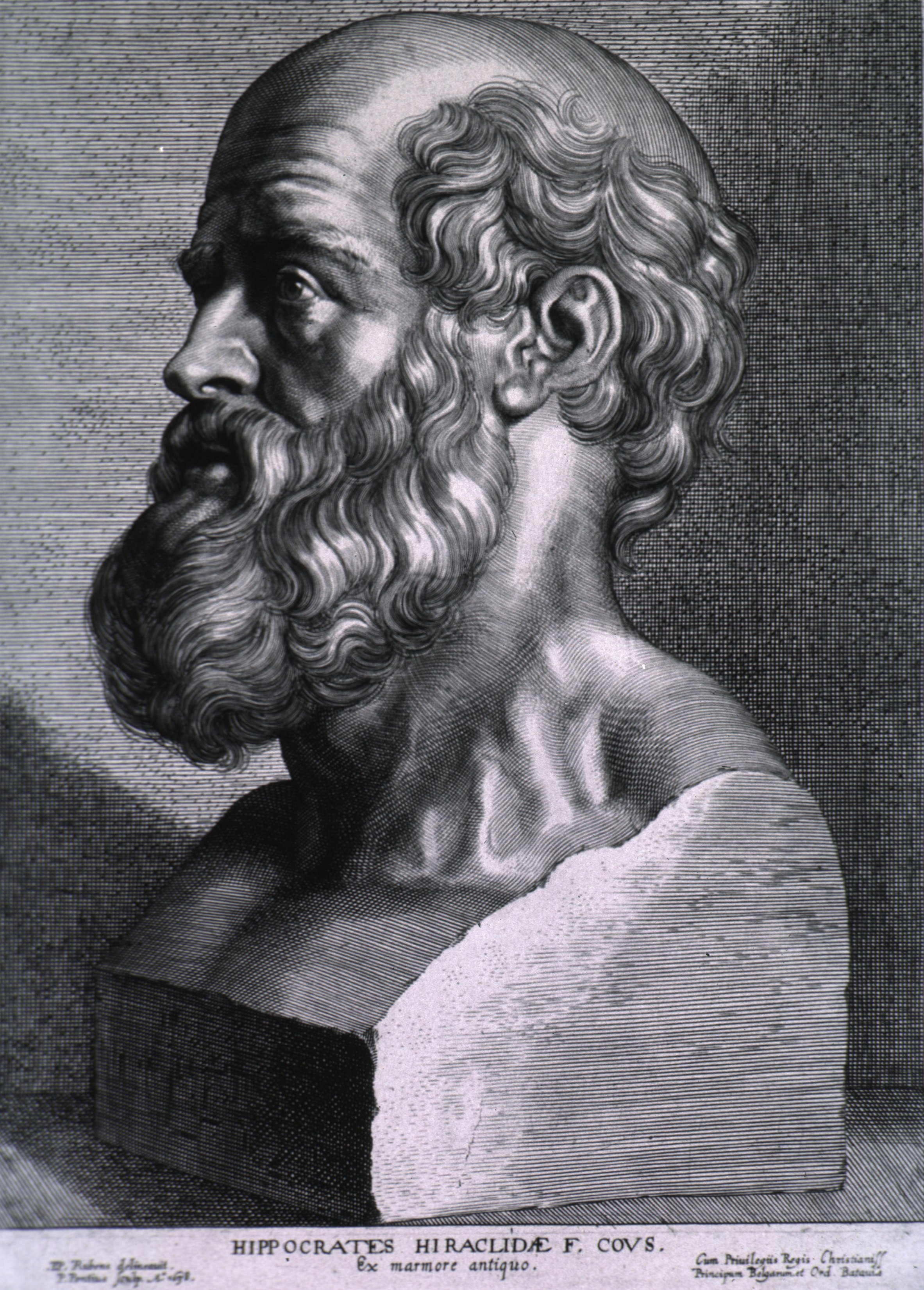
Hippocrates, engraving by Peter Paul Rubens. Public domain (Wikimedia Commons).
Non-Maleficence in Practice
Non-Maleficence do no harm
The case. A new chemotherapy regimen offers a 30% chance of remission and a 5% chance of fatal cardiotoxicity. Standard care offers neither.
The principle does not say “never harm.” It asks:
- Is the expected harm proportionate to the expected benefit?
- Does the patient understand both sides clearly enough to choose?
Every IV start is a small puncture wound. Every medication has side effects. The principle’s job is to forbid hidden, gratuitous, or disproportionate risk — not all risk.

4. Justice
Justice — fair distribution of benefits and burdens.
In bioethics, justice shows up in three main forms:
- Distributive justice — who gets the kidney, the ICU bed, the new drug?
- Procedural justice — was the process fair, even if the outcome is hard?
- Social justice — are we honest about the historical and structural causes of health disparities?

Justice gets a whole chapter of its own later (Chapter 8). For now just plant the flag: bioethics is not only about the encounter between one clinician and one patient.
Justice in Practice
Justice treat fairly
The case. Two 55-year-olds arrive in the ED with chest pain and no obvious red flags. One is on Medicaid; the other has private insurance. Decades of research show that, on average, they will not get the same workup.
Justice at the bedside is rarely a kidney allocation decision. It looks like:
- Are we ordering tests for clinical reasons — or for who the patient appears to be?
- Are our floors and ICUs staffed and supplied equitably?
- Where do we, as nurses, push back against disparate care?
Justice asks us to look up from the individual patient and notice the pattern.
The Four Together
Autonomy Respect her choices about her own body and care. Whose call is this?
Beneficence Promote welfare — hers, and sometimes other people’s too. Who does this help?
Non-Maleficence Do not impose harm without proportionate benefit. Who could this hurt?
Justice Distribute benefits, burdens, and access fairly. Who else has a claim?
A framework, not an algorithm: the four tell you what to weigh, not how much each weighs. Every one of them is also a question about who, and none of the four settles on its own how far its own concern reaches.
Principles Are Prima Facie, Not Absolute
Prima facie (“at first sight”) — a principle is binding unless, in this case, it is outweighed by a stronger competing principle. None of the four is absolute.
Balancing — the deliberate weighing of competing principles in the situation in front of you.
- There is no fixed ranking: autonomy does not always beat beneficence, or vice versa
- Balancing is judgment — but not whim: you must give reasons another reasonable person could weigh
- Example: a competent patient refuses a feeding tube. Autonomy and non-maleficence pull one way, beneficence the other. Balancing usually favors the refusal — if the reasons are stated, not just felt
When May One Principle Override Another?
Disciplined balancing. Before letting principle X override principle Y, you should be able to say:
- Effective — overriding Y will realistically achieve the aim
- Necessary — no weaker option would work
- Least infringement — you intrude on Y as little as possible
- Proportionate — the good gained outweighs the norm set aside
- Consistent — you would judge any relevantly similar case the same way
Example: warning one named, seriously threatened person can meet these conditions; announcing a patient’s diagnosis “just to be safe” cannot.
Specification: From General Norm to Working Rule
Specification — narrowing a broad principle into concrete, action-guiding rules for particular contexts.
| Specified through… | “Respect autonomy” becomes… |
|---|---|
| Law | The right to refuse treatment; informed-consent statutes |
| Institutional policy | The hospital’s consent form and capacity workflow |
| Professional codes | Nursing confidentiality and scope-of-practice duties |
| Clinical protocol | When a second clinician must confirm capacity |
- Balancing decides this case; specification builds standing rules so we do not re-argue every case from zero
Your turn. Take “respect autonomy” and specify it once more: write one concrete rule a specific unit could actually post on the wall.
Why Do Careful People Still Disagree?
Most — though not all — people accept the common morality. So deep disagreement in bioethics is usually not good vs. evil. It has four main sources:
| Source | What is really in dispute | Example |
|---|---|---|
| Facts | The empirical situation | “How likely is this harm?” |
| Balancing | How to weigh shared norms here | Autonomy vs. beneficence in a refusal |
| Specification | Which concrete rule the norm becomes | What counts as informed consent |
| Deep value clash | A real disagreement at the margins | The moral status of an embryo |
Naming the source is the first move: a factual dispute is resolved very differently from a values dispute.
Moral Conflict vs. Moral Dilemma
- Moral conflict — moral reasons pull both ways, but one course is, on balance, better justified. Most hard cases are like this.
- Moral dilemma — there are strong moral reasons for incompatible actions and no clean option: the better choice still breaks a real obligation.
- Moral residue — the regret or duty-to-repair that remains even when you choose well. Its presence signals a true dilemma, not just a tough call.
Example. Two patients, one ICU bed, equal need. Choosing is not “solving” it — the patient not chosen was still owed care. The residue you feel is appropriate, not irrational.
When Principles Conflict
Most interesting bioethics cases are conflicts between principles, not conflicts between good and evil. Four collisions you will meet all semester:
The four principles do not resolve these tensions. They make them visible so we can argue about them carefully.
Your Turn — Name the Collision
Think of a situation from clinical, work, family, or the news in which two of these four principles pulled against each other.
- Which two were they? Name them.
- Which one won — and was that the right call?
Thought Question
Return to our trauma-bay patient — a signed refusal, a patient who cannot confirm it, parents at the door. Now you have vocabulary for what was hard.
- Which principles point toward transfusing her? Which point away?
- Which counts as the “harm” — letting her die, or doing to her body the thing she put in writing that she refused?
- Which principle would you weight most heavily, and why?
- What single fact, if changed, would change your answer?
After You’ve Discussed
Note
Harm is not a fixed quantity. It depends on whose life it is. The same act changes category depending on whose account of her good you use. Transfusing her rescues a body and overrides a person. Honoring the card respects a person and loses a body. Both descriptions are accurate, and that is the difficulty— not a trick of wording.
This is why the principles do not settle cases. They give us shared language for arguing about which description of the act is the one that matters here.
Reading a Moral Argument
A skill we will use in every remaining lecture.
What Is an Argument?
An argument, in philosophy, is not a quarrel. It is a structured piece of reasoning:
- One or more premises (claims offered as support)
- A conclusion (the claim the premises are meant to support)
The job of the careful reader: find the conclusion first, then the premises, then ask whether the premises are true and whether they actually support the conclusion.
Worked Example
A short argument you might hear on the floor:
“We have to transfuse her — she’ll die otherwise, and our job is to save lives.”
Hidden Assumptions
Sounds airtight — until you notice what’s missing. That argument quietly assumes:
- “Saving lives” always outweighs the patient’s other wishes.
- The patient’s refusal can be set aside because it’s “irrational.”
- A refusal she cannot repeat right now is not really a refusal.
- A nurse’s professional duty is identical to “extending biological life.”
Each of those is contestable. Surfacing hidden assumptions is half the work of bioethics.
What Is a Fallacy?
A fallacy is an error in reasoning — an argument that looks like good support but isn’t.
- Not the same as a lie. The speaker may sincerely believe it.
- A fallacious argument can still have a true conclusion — the defect is in the structure, not the conclusion.
- Most bioethics fallacies are informal: the form looks fine, but the content misleads through irrelevance, ambiguity, or hidden assumption.
The next two slides cover the six you will see most often.
Common Fallacies in Bioethics (1/2)
Appeal to Nature Inferring that something is good (or bad) merely because it is natural (or unnatural). “IVF lets older women conceive — but it’s unnatural, so it must be wrong.”
Slippery Slope Predicting that allowing X will inevitably lead to a much worse Y, without showing how the slide actually happens. “If we permit medical aid in dying for the terminally ill, we’ll end up euthanizing the disabled.”
Ad Hominem Attacking the person making the argument rather than the argument itself. “You can’t take Peter Singer seriously on animal ethics — he holds a lot of unpopular views.”
Common Fallacies in Bioethics (2/2)
Naturalistic Fallacy Inferring an ought directly from an is — that what happens in nature shows what should happen morally. “Humans evolved as omnivores, therefore eating meat is morally permissible.”
False Dichotomy Framing a complex issue as if there were only two options, when others exist. “Either we let the market ration health care, or the system will collapse.”
Appeal to Authority Treating the testimony of an authority as decisive even when they speak outside their expertise — or when other experts disagree. “My favorite podcaster says vaccines cause autism, and he has done a lot of research.”
Practice — Spot the Fallacy
Name the fallacy in each, then say what has actually gone wrong in the reasoning.
- “Gene editing is wrong — it’s playing God.”
- “If we let doctors help patients die, we’ll end up euthanizing the disabled.”
- “You can’t trust her opinion on vaccines — she’s not even a real scientist.”
- “Either we ration care by ability to pay, or the system collapses.”
Naming the fallacy is the easy half. The half that matters is saying why the premises fail to support the conclusion — and remembering that a bad argument can still have a true conclusion.
Your Turn — Bring Your Own
Think of one argument about health you have actually heard — from family, a provider, a patient, or social media.
- What is wrong with it?
- What would have to be true for it to work?
Wrapping Up Part A
Bioethics is the systematic study of moral questions in medicine, research, and policy. It is mostly applied normative ethics — distinct from descriptive and metaethical inquiry, and not the same as law, religion, or personal preference. The four principles — autonomy, beneficence, non-maleficence, justice — are an explication of the common morality we already share, made usable through balancing and specification, and they give us a shared vocabulary for the conflicts we’ll see all semester. And every claim in this course will be evaluated as an argument: premises, conclusion, hidden assumptions, possible fallacies.
In Part B, we ask the next question: where do these principles come from? We meet the major ethical theories — utilitarian, Kantian, virtue, and care — that ground and sometimes contest the four principles.
All uncredited slide illustrations and scenario visualizations were generated using Gemini.
Review Questions
Write a brief answer to each, or use them as discussion prompts.
Recall
What is the difference between descriptive ethics, normative ethics, and metaethics, and why is bioethics usually classified as applied normative ethics?
Apply
May a doctor refuse — on personal grounds — to even discuss medical aid in dying with a patient who asks about it? Which two of the four principles are most in tension in this case?
Debate
In a pluralistic hospital, should policy be justified only with publicly shareable reasons that people across worldviews can assess, or is it legitimate to defend policy openly with religious reasons that not everyone accepts?
Key Terms
- Bioethics — the field that studies ethical questions raised by biomedicine, health care, and the life sciences.
- Descriptive ethics — the empirical study of what people actually believe and do about morality.
- Normative ethics — the study of what people morally ought to do; bioethics is applied normative ethics.
- Metaethics — the study of the nature, meaning, and justification of moral claims themselves.
- Common morality — the core set of moral norms shared by all morally serious persons across cultures.
- Four principles — Beauchamp and Childress’s framework: autonomy, beneficence, non-maleficence, justice.
- Autonomy — the patient’s right to make informed, voluntary decisions about their own care.
- Beneficence — the duty to act for the patient’s benefit.
- Non-maleficence — the duty not to inflict harm (primum non nocere).
- Justice — fair distribution of benefits, burdens, and access to care.
- Prima facie — binding unless outweighed by another duty in the particular case.
- Balancing — weighing competing prima facie duties when they conflict.
- Specification — narrowing an abstract principle into a more concrete action-guiding rule.
- Moral conflict — a situation where principles pull in different directions but a defensible choice is possible.
- Moral dilemma — a conflict in which every available option violates a real moral duty.
- Moral residue — the lingering moral cost of having had to set aside a duty one still recognized.
References
Beauchamp, Tom L., and James F. Childress. 2019. Principles of Biomedical Ethics. 8th ed. Oxford University Press.
Jonsen, Albert R. 1998. The Birth of Bioethics. Oxford University Press.
National Commission for the Protection of Human Subjects of Biomedical and Behavioral Research. 1979. The Belmont Report: Ethical Principles and Guidelines for the Protection of Human Subjects of Research. U.S. Department of Health, Education, and Welfare. https://www.hhs.gov/ohrp/regulations-and-policy/belmont-report/index.html.
Bioethics OER · CC BY-NC 4.0 · Brendan Shea