Central Questions
- What is a game — and what separates play from work?
- Do video games build or erode our moral character?
- Why does every generation fear the latest entertainment medium?
- Bernard Suits argues that in a perfect world, life would consist of games — is he right?
- If AI takes over most human labor, what gives our lives meaning?
What Is Play?
Games and play appear in every human culture. Long before cities or writing or agriculture, human beings played. The Royal Game of Ur, excavated in southern Iraq, dates to roughly 2600 BCE; there are board games from Egypt, athletic competitions from ancient Greece, ritual ball games from the pre-Columbian Americas. Depressions cut into stone at Neolithic sites in Jordan may be boards for a sixth-millennium BCE counting game — though that reading is disputed. The impulse to play runs deeper in us than almost anything we call civilized. Animals play too — puppies wrestle, crows slide down snowy rooftops — but no other species elaborates play into structured games with rules, stakes, and stories.
Yet philosophy has often been suspicious of play. Plato worried that poetry and performance corrupted the soul by feeding its lower, appetitive parts . The Protestant tradition tied virtue to productive labor and cast recreation as dangerous idleness. Even today, when someone says they "just play video games," the phrase carries a slight air of apology. This chapter argues that such suspicion is philosophically unjustified — and that games may, in fact, be among the most important things human beings do.
Key Thinker
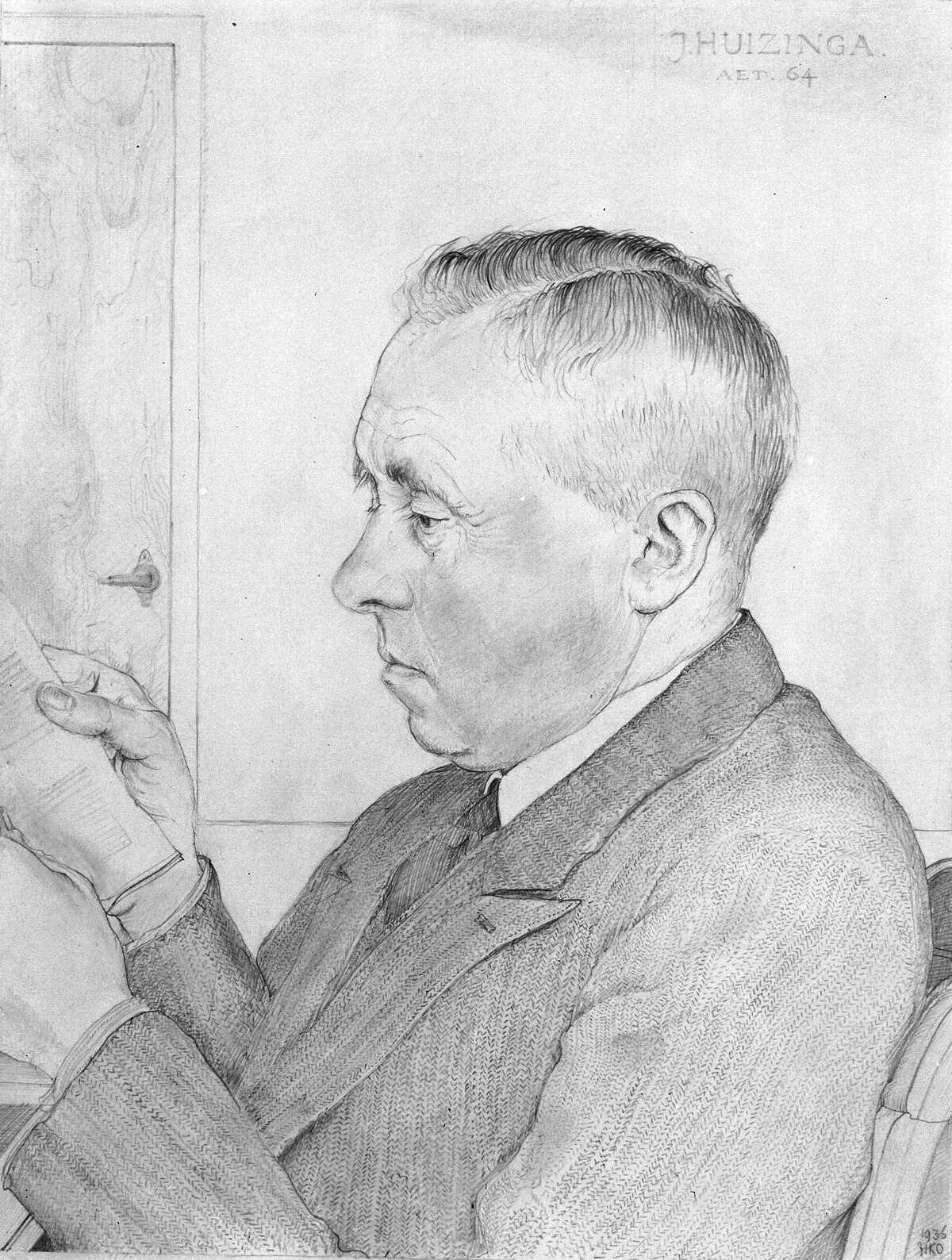
Johan Huizinga (1872–1945)
Johan Huizinga was a Dutch cultural historian and rector of Leiden University. His 1938 masterwork Homo Ludens — "Man the Player" — argued that play is not a byproduct of culture but its very foundation . Before humans built temples or wrote law codes, Huizinga contended, they played — and the ritual, contest, and performance embedded in play were the seedbed from which law, religion, art, and science grew.
Huizinga lived through the Nazi occupation. In 1942 he was interned in the German hostage camp at Sint-Michielsgestel; released after some months, he was confined under watch to the village of De Steeg, where he died on 1 February 1945, weeks before the liberation of the Netherlands. That experience deepened his conviction that genuine play — voluntary, rule-governed, separate from the machinery of power — was not a luxury but a form of human dignity.
His other major works include The Waning of the Middle Ages (1919) and In the Shadow of Tomorrow (1935), a prescient diagnosis of the cultural pathologies that would soon produce fascism.
The Magic Circle
Huizinga's most influential legacy in the philosophy of games is the magic circle: the boundary separating the space of play from ordinary life. When two people sit down to play chess they enter a space governed by rules that have no force outside it — a pawn cannot be promoted in real life, and no one must move only on diagonals while crossing a street. Within the circle these rules are absolute. Outside it they are nothing.
A caution about attribution, because textbooks routinely get this wrong. Huizinga uses "magic circle" only in passing, in a list of the marked-off places where play happens — the arena, the card table, the temple, the stage, the court of law . It became a technical term in game studies mainly through Katie Salen and Eric Zimmerman's Rules of Play (2003) ; Zimmerman has since said their version was more their own invention than a close reading of Huizinga. The phrase carries far more theoretical weight today than it did in Homo Ludens.
The Magic Circle
The bounded, rule-governed space of play, temporarily separate from ordinary life. Within it, special rules apply and special meanings attach to actions that would be meaningless or different outside. Examples: a chess board, a football field, a theater stage, a negotiating table governed by diplomatic protocol.
What, then, are the marks of genuine play? Huizinga sketched several in Homo Ludens; the French sociologist Roger Caillois, writing twenty years later, tightened them into the six-part list that has been standard ever since :
- Voluntary: Genuine play cannot be commanded. Forced play ceases to be play.
- Separate: Play is bounded in time and space — it has a beginning and an end.
- Uncertain: The outcome cannot be known in advance; genuine stakes exist within the circle.
- Unproductive: Play creates no goods or wealth — it is an end in itself.
- Rule-governed: Play operates under conventions that suspend ordinary life.
- Make-believe: Play involves a shared pretense that distinguishes it from "real" life.
One striking implication is that many activities we do not typically call "games" fit the magic circle description. Courtroom procedure, diplomatic protocol, religious ritual, even scientific peer review are all bounded, rule-governed spaces in which special meanings apply. Huizinga's point is not that these activities are trivial — quite the opposite. The playful spirit that animates them is precisely what gives them their power.
Thought Questions
- Pick an activity you take entirely seriously — a job, a religious practice, a courtroom. How many of Caillois' six features does it satisfy? Does calling it "play" diminish it, or explain why it works?
- Genuine play must be voluntary. Think of a time you were made to play — a required team sport, a mandatory icebreaker. Did it still feel like play? What was missing?
- Steelman the suspicion. Plato and the Puritans thought play genuinely dangerous, not merely frivolous. Construct the strongest version of that worry.
Defining Games
Huizinga described play richly, but left a question unanswered: what precisely makes something a game rather than just any rule-governed activity? The Canadian philosopher Bernard Suits spent decades on exactly this question, and his answer remains the most precise definition of games ever proposed.
Key Thinker
Bernard Suits (1925–2007)
Bernard Suits was a Canadian philosopher at the University of Waterloo who devoted much of his career to a single, apparently simple question: what is a game? His 1978 book The Grasshopper: Games, Life and Utopia — a Socratic dialogue between the Grasshopper of Aesop's fable and his disciples, Skepticus and Prudence — is one of the most original works of analytic philosophy of the twentieth century .
Suits argued that playing a game is "the voluntary attempt to overcome unnecessary obstacles." The deceptively simple formula conceals enormous depth. What is distinctive about games is not their outcomes but their structure: the voluntary acceptance of constraints that make achievement harder rather than easier, for the sake of the activity itself.
He extended the analysis into a philosophy of human life: in a utopia where all material needs were automatically satisfied, the only rational activities left would be games — an argument that has acquired new urgency in an era of AI-driven automation.
Suits' Three Elements
Suits' definition has three components, each necessary and together sufficient:
Suits' Three Elements of a Game
(1) Prelusory goal: a specific state of affairs achievable independently of the game — getting a small ball into a hole in the ground. (2) Constitutive rules: rules that forbid the most efficient means of achieving it — requiring a club rather than carrying the ball. (3) Lusory attitude: the player's voluntary acceptance of those rules because doing so makes the activity possible — unnecessary obstacles as the condition of playing at all.
The golf example is illuminating. The prelusory goal could be trivially achieved by picking the ball up and dropping it in the hole. But that would not be golf. The constitutive rules require a club, a designated tee, a count of every stroke; they make the task harder. And the golfer accepts them willingly, because the rules are what constitute the activity they want to engage in. Without them there is no golf, only a ball and a hole.
What's the Argument?
Suits' Definition of a Game
- A game involves a prelusory goal achievable, in principle, without the game's rules.
- Its constitutive rules forbid the most efficient means to that goal.
- The player adopts the lusory attitude, accepting those obstacles because doing so enables the activity.
Caillois' Four Types
If Suits gave us the most precise definition of a game, Caillois offered the most useful taxonomy. In Man, Play and Games (1958) he identified four fundamental types of play, each present in cultures across history:
| Type | Greek/Latin Term | Description | Examples |
|---|---|---|---|
| Competition | Agôn | Skill-based contest between players | Chess, tennis, esports |
| Chance | Alea | Outcomes determined by fortune | Dice, roulette, loot boxes |
| Mimicry | Mimicry | Role-playing and simulation | Dress-up, RPGs, theater |
| Vertigo | Ilinx | Pursuit of disorientation or sensation | Rollercoasters, racing games, VR |
One reason video games are so compelling is that they can combine all four types at once. Fortnite involves skill-based competition (agôn), randomized loot and weapon drops (alea), elaborate character skins and personas (mimicry), and an intense kinesthetic rush (ilinx). Few other human activities layer all four together.
Nguyen: Games as an Art Form for Agency
The philosopher C. Thi Nguyen has proposed a striking extension of Suits' framework. In Games: Agency as Art (2020), he argues that games are not just structured activities — they are an art form for sculpting the player's agency itself . Where a novelist shapes emotions and a painter shapes perception, a game designer shapes what it feels like to have certain goals, to face certain choices, to experience certain forms of striving.
Key Thinker
C. Thi Nguyen (b. c. 1977)
C. Thi Nguyen is a philosopher at the University of Utah whose work focuses on games, trust, and the epistemology of testimony. Games: Agency as Art (2020), which won the American Philosophical Association's book prize, argues that games are a distinctive art form — not for their stories or their visuals, but for their mechanics.
Nguyen also developed the influential concept of value capture: the process by which gamification takes the rich, complex values of some activity and replaces them with a simplified, measurable score. The simplicity of the score crowds out the complexity of what the activity was originally for.
Value capture reaches well beyond games. A company that gamifies customer service with points and badges invites employees to maximize the score in place of the richer values the job was meant to serve; universities that measure teaching by student evaluation numbers get professors who "play the game" and optimize for likability rather than learning. Recognizing when our values have been captured by a simplified scoring system, Nguyen argues, is one of the most important critical skills of the twenty-first century.
state achievable
without rules] --> B[Constitutive Rules
forbid the most
efficient means] B --> C[Lusory Attitude
voluntary acceptance
of obstacles] C --> D[The Game
voluntary striving
for its own sake] D --> E{Value?} E -->|Genuine play| F[Agency as Art
Nguyen] E -->|Gamification| G[Value Capture
score replaces
real purpose]
Thought Questions
- Apply Suits' three-part test to a mobile "idle game" that plays itself while you sleep, a loot box, and a farming simulation like Stardew Valley. Which are genuinely games, and does the answer matter?
- Describe a game you have played that fits more than one of Caillois' four categories. Which category was doing the real work in keeping you playing?
- Value capture happens when a score crowds out the thing it measured. Where have you seen it — school, fitness apps, social media, work? Did you notice at the time?
Moral Panic and the Work Ethic
Before evaluating whether video games actually harm players, ask a prior question: why do new entertainment media so reliably produce moral panics? The pattern is remarkably consistent. Each new medium triggers the same fears — that it will corrupt the young, undermine productivity, erode character, and distract society from serious pursuits — and each time those fears turn out to be substantially overstated, even as genuine concerns are eventually identified.
| Era | Medium | The Fear | What Actually Happened |
|---|---|---|---|
| 1800s–1900s | Penny dreadfuls, pulp novels | Corrupted working-class youth; glorified crime | Became mainstream popular fiction |
| 1950s | Comic books | Senate hearings; linked to juvenile delinquency | Repressive comics code, but no delinquency link found |
| 1980s | Dungeons & Dragons | Occult influence; "satanic panic" | No credible link; now mainstream entertainment |
| 1990s–2010s | Video games | Violence, addiction, social isolation | Evidence mixed and contested; see Section 4 |
| 2010s–present | Social media | Anxiety, depression, polarization, addiction | Some evidence of harm, especially for adolescent girls; research ongoing |
Why does the pattern recur? The sociologist Max Weber identified one deep source of the anxiety.
Key Thinker
Max Weber (1864–1920)
Max Weber was a German sociologist whose The Protestant Ethic and the Spirit of Capitalism (a pair of essays, 1904–05) tied the rise of capitalism in Northern Europe to the Calvinist doctrine of predestination . If salvation was predetermined and unknowable, anxious Calvinists sought reassurance in worldly success as a sign of divine favor. Hard work, frugality, and reinvestment became not merely useful but spiritually necessary.
This mentality was then secularized into what Weber called the Protestant work ethic: the norm that treats productive labor as intrinsically virtuous and idleness as morally suspect. Even in a secular age it persists — in the guilt many people feel about "wasting time," in the prestige of being busy, in the suspicion that people who play are not contributing their share.
That explains why entertainment media reliably triggers moral panic: play is the paradigmatic socially unproductive activity, and in cultures shaped by the work ethic it carries a persistent taint of irresponsibility.
The question this raises is whether the equation of virtue with productive labor has any philosophical foundation, or is merely a contingent norm that emerged from a specific theological tradition. Suits' philosophy gives strong reasons to think the work ethic's suspicion of play has things exactly backwards.
Case Study
The 1954 Senate Hearings on Comic Books
In 1954, the United States Senate held hearings on comic books and juvenile delinquency, inspired by the psychiatrist Fredric Wertham's Seduction of the Innocent. Wertham claimed comics glorified violence, promoted sexual deviance, and caused criminal behavior in young readers; Batman and Robin were cited as a "homosexual fantasy," Wonder Woman as promoting lesbianism. The panic led the industry to impose the Comics Code Authority on itself, which effectively censored American comics for decades.
Subsequent scholarship found Wertham's research deeply flawed: he cherry-picked cases, overstated and misreported his methods, and never established any causal link. The moral panic was real; the danger was largely invented. The episode is a useful caution against similar claims about video games or social media — though notice that "the last panic was overblown" is not by itself an argument that the current worry is.
Thought Questions
- Do you feel guilty spending an afternoon playing a video game? Where does that feeling come from — and is it tracking anything real?
- "Everyone panicked last time and was wrong" is a weak inductive argument. Steelman the worried parent: what would count as good evidence that this medium really is different?
- Which entry in Table 12.2 is most likely to be judged differently in fifty years, and why?
Video Games: Harm or Benefit?

Video games are now the largest entertainment industry in the world. Industry trackers put global revenue past $200 billion for the first time in 2025, with roughly three and a half billion people playing something in a given year — commercial market research rather than official statistics, so good estimates rather than exact counts . Questions about games' effects — on attention, aggression, social skills, moral character — therefore matter for policy, for parenting, and for understanding what much of humanity is doing with much of its time.
The Violence Research Debate
The most prominent concern about video games has been a potential link to aggression and violence. The psychologist Craig Anderson and his collaborators conducted a series of influential meta-analyses concluding that exposure to violent video games increases aggressive thoughts, feelings, and behavior while decreasing empathy, across both Eastern and Western cultures . Through the 2000s and early 2010s those conclusions were widely cited in policy discussions and seemed to represent a scientific consensus.
The appearance of consensus did not survive the decade. This is one of the places in the book where the honest answer is that researchers of good faith still disagree, and it is worth watching how the disagreement works rather than picking a side in advance.
Pro-Argument
The Case for Harm (Anderson's Position)
- Meta-analyses across dozens of studies find correlations between violent game exposure and increased aggressive thoughts, feelings, and behaviors.
- Experimental studies show short-term increases in aggression measures after violent game play.
- Longitudinal studies suggest cumulative effects over time.
- The mechanism is independently plausible: repeated rehearsal of a response, reliably rewarded, makes it more available.
Objection
The Methodological Critique (Ferguson's Response)
- Laboratory aggression measures (assigning hot sauce to a stranger, blasting noise through headphones, completing word fragments) have poor ecological validity — they do not predict real-world violence.
- The literature shows signs of publication bias: null results are less likely to be published, which inflates the pooled estimate.
- Once bias is corrected for, the surviving effect sizes are very small — small enough that their practical significance is doubtful.
- At the population level, sharply increased game use over thirty years has coincided with a decline in youth violence, not an increase.
- Cross-national comparisons show no correlation between game consumption and violent crime; some of the heaviest-gaming countries, Japan and South Korea among them, have the world's lowest homicide rates.
Three developments since roughly 2015 have shifted expert opinion toward Ferguson's side, without settling the question. First, preregistered studies — hypotheses and analysis plans published before data are collected, closing off the search for a significant result afterward — have generally failed to reproduce the earlier effects. Przybylski and Weinstein's preregistered study of British adolescents (2019) found no relationship between violent game play and carer-reported aggressive behavior , and several registered replications of classic laboratory experiments came back null. Second, Ferguson's own meta-analytic work found that once methodological quality is accounted for, video game influences on children's aggression, mental health, and academic performance are close to trivial . Third, the professional bodies narrowed their language: the American Psychological Association revised its 2015 resolution in February 2020 to say the research shows an association with aggression but cannot support a causal link to violent criminal behavior, and that blaming mass shootings on video games "is not scientifically sound."
None of this means Anderson was simply wrong, or that the episode can be filed away as another debunked panic. His defenders point out that small effects spread across billions of players can still matter at population scale, and that "no effect on criminal violence" is compatible with real effects on everyday hostility and desensitization. The defensible summary is narrow: reasonable evidence for short-term increases in measured aggression in the laboratory; a poorly established link between those measures and real-world violence; and dramatic 2000s claims that have not survived methodological scrutiny. Where evidence is this contested, the interesting question is not "who won?" but "how much confidence does it license, and what should we do while still uncertain?"
Gaming Disorder
A separate concern is whether games can become genuinely addictive. In 2019 the World Health Organization added "Gaming Disorder" to the eleventh revision of the International Classification of Diseases, in force since January 2022 : a pattern of impaired control, priority given to games over other activities, and continuation despite negative consequences, normally persisting at least twelve months and causing significant impairment. The diagnosis remains contested, and prevalence estimates vary widely with the criteria used — strict criteria applied to general population samples find well under one percent of players qualifying , looser instruments several times that. Problematic gaming is real, it is a minority phenomenon, and we do not yet measure it well.
Case Study
Loot Boxes and the Gambling Debate (2018–2026)
A loot box is a randomized in-game reward bought with real money: pay $2.99, receive an assortment of items, some common, some rare. The structure resembles a slot machine — variable-ratio reinforcement, the schedule that produces the most persistent behavior — the cost is usually hidden behind an intermediate currency of "coins" or "gems," and the mechanic is most prevalent in games with very large young audiences.
Belgium concluded in 2018 that paid loot boxes constitute gambling under its Gaming and Betting Act, and publishers pulled the mechanic from Belgian versions of their games — EA stopped selling FIFA Points there. The Belgian ban still stands, the strictest in Europe. The Netherlands initially reached the same conclusion and fined EA over the FIFA "Ultimate Team" packs — but that decision was overturned on appeal in March 2022, when the Dutch Council of State held that opening packs is not a separate game of chance but a chance element inside a wider game of skill. The fine was annulled. It is a common error, repeated in many textbooks and news summaries, to say that both countries banned loot boxes; only Belgium's ban survived .
The picture since has fragmented rather than converged: China and South Korea require publishers to disclose the exact probability of each reward; the United Kingdom declined to legislate, preferring industry guidance; Brazil has banned paid loot boxes in games accessible to minors; the European Union has issued principles on in-game currencies, with a stricter Digital Fairness Act still only a proposal.
The debate illustrates value capture: mechanics built to maximize monetization colonize players' motivations, replacing play with compulsive spending. It also shows something about regulation. Every jurisdiction is asking the same question — is this gambling? — and getting different answers, because the answer turns on statutes written long before anyone imagined buying a randomized soccer player for $2.99.
Psychologists applying Ryan and Deci's self-determination theory offer a more nuanced account . Healthy motivation, on this view, requires satisfying three basic needs: competence, autonomy, and relatedness. Games that supply genuine mastery, meaningful choices, and real social connection tend to produce engaged play without harmful dependence; games that frustrate those needs while working compulsion loops tend to produce the anxious play associated with gaming disorder. The problem is not games as such but specific design choices that undermine rather than support wellbeing.
The Case for Benefit
Jane McGonigal, a game designer at the Institute for the Future, has made the most sustained case that games are not merely harmless but actively beneficial. Her 2011 book Reality Is Broken argues that well-designed games satisfy deep human needs more reliably than most real-world activities , through four features: urgent optimism (the belief that an epic challenge is achievable), social fabric (relationships strengthened through cooperation), blissful productivity (the satisfaction of hard work), and epic meaning (participating in something larger than oneself).
Case Study
Foldit: When Games Solve Real Problems
In 2008, biochemists and game designers at the University of Washington launched Foldit, which asked players to fold proteins into their optimal three-dimensional configurations. Protein folding matters for understanding disease and designing drugs, but it is computationally intractable — the number of possible configurations is astronomical.
Within three years, Foldit players cracked a structure that had resisted crystallographers for roughly fifteen years: the monomeric protease of the Mason–Pfizer monkey virus, a retrovirus causing an AIDS-like disease in primates. Teams of players generated models good enough to solve it in about ten days. The result appeared in Nature Structural & Molecular Biology in 2011 , with the players credited as authors — the first time non-scientists had solved a long-standing problem of this kind. McGonigal cites it as evidence that persistence, spatial reasoning, and collaboration can be directed at real science.
Ian Bogost makes a different case for the significance of video games. In Persuasive Games (2007) he argues that games have a distinctive rhetorical power he calls procedural rhetoric: the ability to argue through rules and mechanics, not just story or visuals . Spent (2011), which simulates the impossible financial choices of people in poverty, and Papers, Please (2013), in which players work as border officers in a dystopian state and are implicated in its cruelty by the act of following its rules, argue through their mechanics in ways no other medium could match. Twenty minutes of Spent conveys something prose cannot replicate.
Thought Questions
- The violence research is genuinely contested. Having read both boxes above, what specific finding would move you toward Anderson, and what toward Ferguson?
- Think about the games you spend the most time in. Do they satisfy the self-determination needs — competence, autonomy, relatedness — or mostly keep you on a schedule of rewards? How would you tell from the inside?
- Steelman the publisher. Loot boxes fund free-to-play games that millions enjoy without spending anything. Make the strongest case that banning them harms players — then say what is wrong with it.
Virtue Ethics and Video Games
Chapter 2 introduced Aristotle's account of virtue: character is formed by habituation, by what we repeatedly do . We become brave by doing brave things, just by doing just things, honest by telling the truth. That raises an obvious question about games: if we spend thousands of hours practicing the attitudes and responses games reward, what kind of character are we forming?
The question cuts both ways. Critics worry that games rewarding aggression, exploitation, or deception habituate players to those responses. Defenders counter that the magic circle insulates in-game behavior from real-world character formation — the brutality of Call of Duty no more habituates players to violence than a thriller film habituates viewers to murder. The research reviewed in Section 4 gives the defenders some support: the link between violent game play and real-world aggression has proven elusive.
There is also a case that cooperative multiplayer games actively cultivate virtue. Overcooked demands real-time coordination, communication under pressure, and patience; Portal 2 in co-op mode requires trust and perspective-taking, since you cannot solve the puzzles without understanding your partner's vantage point; Among Us exercises social deduction and the management of trust under uncertainty. These games need other people to succeed. They are practice not for solipsism but for collaboration, and the virtues they exercise transfer directly to life outside the magic circle.
Key Thinker
Shannon Vallor (contemporary)
Shannon Vallor is a philosopher and AI ethicist who holds the Baillie Gifford Chair in the Ethics of Data and Artificial Intelligence at the University of Edinburgh. Her 2016 book Technology and the Virtues develops a technomoral virtue framework for the digital age . Drawing on Aristotle, Confucius, and Buddhist ethics, she argues that our character is continuously shaped by our technological practices, and that in an era of rapid technological change, deliberate attention to virtue cultivation matters more than ever.
Her framework bears directly on gaming: she identifies specific technomoral virtues that must be actively cultivated in a digitally mediated world — virtues games can foster or undermine depending on their design and how they are played.
| Virtue | How Games Can Foster It | How Games Can Undermine It |
|---|---|---|
| Honesty | Genuine skill assessment; codes of honor | Cheating culture; deceptive free-to-play marketing |
| Courage | Taking risks; persisting through difficulty | Toxic "gamer" identity; harassment of vulnerable players |
| Empathy | Perspective-taking in role-playing; cooperative games | Dehumanizing enemy NPCs; anonymous online cruelty |
| Justice | Shared goals; fair-play norms | Toxic competition; sexism and harassment in gaming culture |
| Self-regulation | Managing resources; deferring rewards | Addictive design loops that undermine impulse control |
| Humility | Accepting loss; respecting opponents | Rage-quitting; "gamer" entitlement culture |
Case Study
Esports: Achievement or Exploitation?
Professional gaming — esports — is a real industry, though a modest one beside games as a whole: market estimates for the mid-2020s cluster between roughly $3 billion and $5 billion a year, depending on what is counted. Top players earn substantial incomes in games like League of Legends, Counter-Strike, and Valorant before very large audiences; the 2025 League of Legends world final drew a peak of about 6.75 million concurrent viewers outside China alone, and the 2019 Fortnite World Cup paid out $30 million in prizes.
But the demands are severe. Players commonly train ten hours a day or more, and repetitive strain injuries — carpal tunnel syndrome, tendinitis — are common. Performance in reaction-intensive titles tends to peak around age twenty-one, and many retire in their mid-twenties with no qualifications and no plan. Burnout is endemic. Critics argue that the industry exploits young players' passion while providing minimal labor protection, health support, or provision for the years after.
The case also raises a question about Suits' definition. When the lusory attitude — the voluntary acceptance of obstacles for the sake of playing — is replaced by economic necessity, does the activity retain its character as play?
Thought Questions
- Think about a game you have played for many hours. Did it change how you think, feel, or behave outside it? Be specific — and honest about whether you are reporting evidence or defending a habit.
- A parent bans Grand Theft Auto but allows Fortnite. What ethical framework is she using, and is she right?
- Could a game ever be morally obligatory — something we ought to play for what it teaches us? What would such a game have to be like?
Suits' Utopia: Life as a Game
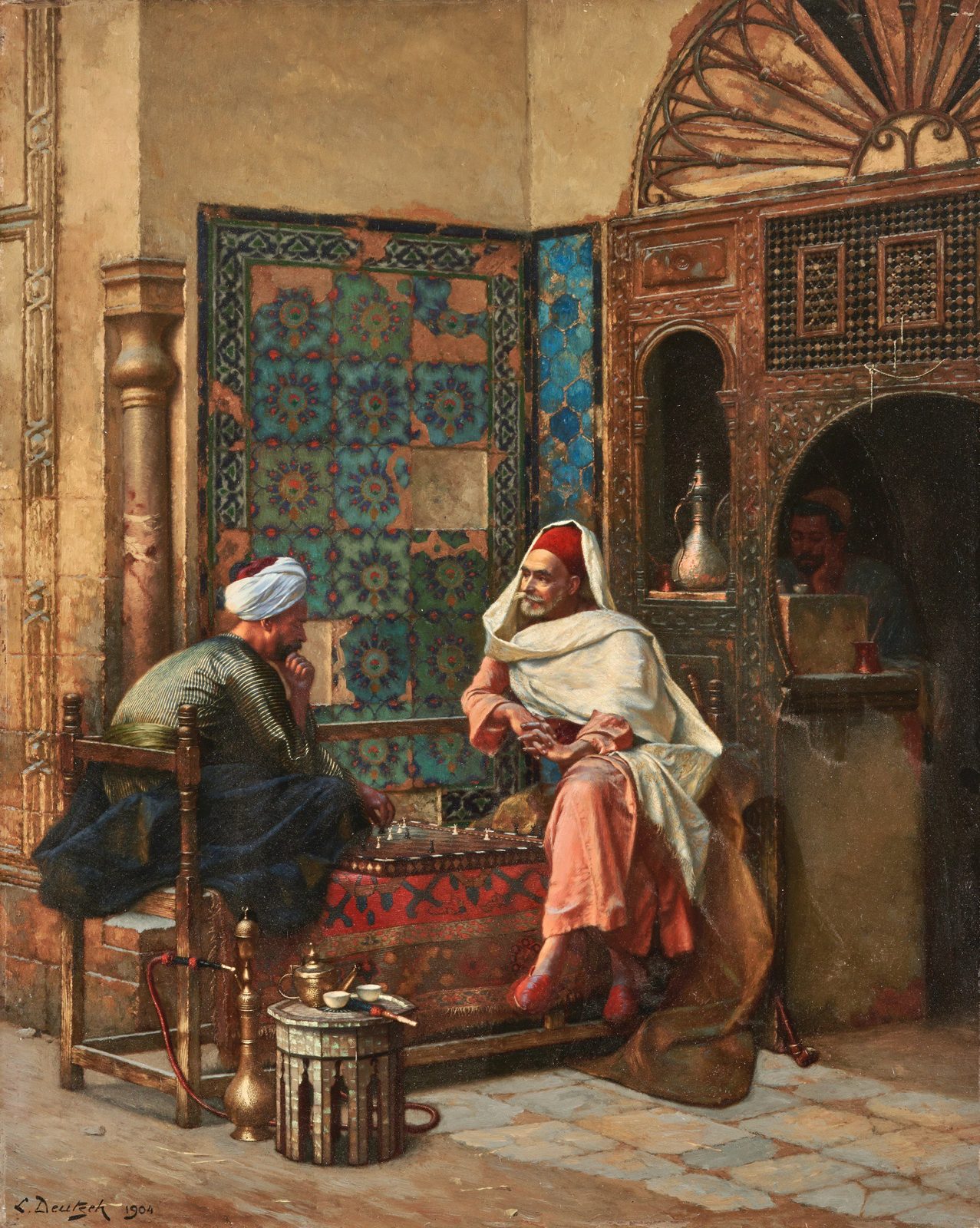
Suits' most profound contribution is not the definition of a game but the argument he builds on top of it. In The Grasshopper, he uses Aesop's fable to raise the deepest question in the philosophy of leisure: if the Ants work to survive, what is the point of surviving?
Case Study
The Grasshopper and the Ants
In Aesop's fable, the Grasshopper plays all summer while the Ants work, and when winter comes the Ants are warm and fed while the Grasshopper freezes. The moral is clear: be industrious, not idle.
Suits reimagines the fable. His Grasshopper, dying in winter, is unrepentant. He spent the summer playing, and this was not failure. His challenge cuts deeper than it first appears: What are you working for? The Ants work to survive — but what is the point of surviving? To be comfortable enough to do... what? They work to rest, and rest to work. The Grasshopper has understood what they have not: the end of all the working and accumulating is leisure, and the highest form of leisure is play.
He is best understood, then, not as an idler but as a Utopian whose time has not yet come — someone who lives as though Utopia were already here .
The Utopian Paradox
Suits constructs a thought experiment: imagine a world where every material need is automatically satisfied, by perfect technology or by artificial intelligence. No one needs to work. What do people do?
What's the Argument?
Suits' Utopian Paradox
- In utopia, all instrumental activities — those done as means to other ends — are handled automatically.
- The only activities left are those pursued for their own sake.
- Games are pursued via voluntarily accepted obstacles — by definition, not the most efficient path to their prelusory goals.
- An activity whose goal could be achieved more efficiently, but where the efficient means are deliberately rejected for the sake of the activity itself, just is the structure of a game.
The implication is counterintuitive: obstacles are not problems to be eliminated but conditions for meaning. A life with all difficulty removed would not be paradise; it would be meaningless. Striving is not a means to an end; it is the end. This is why chess, which produces nothing, has been played for fifteen centuries — not despite but because of its artificial difficulty.
Objection
The Hollow Obstacle Problem
Can you sustain the lusory attitude — genuinely caring about the outcome — when you know the obstacle was invented purely so you could overcome it? If I know the puzzle was designed for me to solve and the dragon placed there for me to slay, can I really bring to it the full weight of genuine engagement?
Meaningful striving may require genuine stakes. The farmer's crop feeds people; the surgeon's skill saves lives; the soldier's courage protects real communities. Can a game — where no one is helped and nothing is at risk — carry the same weight?
Suits' response: the lusory attitude is itself a form of genuine commitment. When a chess player cares about the game, the caring is real even if the stakes are artificial. Within the magic circle the board becomes a space of genuine meaning — not borrowed from external stakes but generated by the activity itself.
Keynes and the Leisure Problem
An economist writing half a century earlier gave the argument an empirical edge. In 1930, John Maynard Keynes published "Economic Possibilities for Our Grandchildren," predicting that within about a hundred years — so, by roughly 2030 — technological productivity would allow fifteen-hour work weeks . The real challenge of the future, Keynes thought, would not be scarcity but the problem of leisure: how to "live wisely and agreeably and well" when material needs were largely met.
We are far more productive than Keynes imagined — yet most people in wealthy countries work more hours than they did in 1950, not fewer. Productivity gains went into higher incomes and higher consumption rather than leisure. Why?
- Inequality: The gains went disproportionately to capital owners rather than to workers as leisure time.
- Work ethic: In cultures shaped by Weber's Protestant ethic, identity remains bound to productive labor — leisure can feel like failure.
- The Suits problem: We are genuinely uncertain what we would do with leisure. Keynes assumed filling the time would be easy; Suits' analysis suggests it is the hardest problem of all.
Thought Questions
- Imagine waking tomorrow in Suits' utopia: food, shelter, health, and company provided, no work required of anyone. Write down what you would actually do for a month. Does your answer support Suits or embarrass him?
- The Grasshopper asks the Ants what they are working for. Ask it of someone you know who works very hard. What is the honest answer, and is it a good one?
- Steelman the Ants. Make the strongest case that the Grasshopper is a freeloader whose way of life depends on others refusing to adopt it.
AI, Post-Work, and the Meaning of Life
Chapter 8 examined how AI transforms labor. The question here is philosophical rather than economic: if AI handles most productive work, what gives human life meaning? Not a question about income — proposals for universal basic income address the distribution problem — but one about purpose, identity, and flourishing.
Three broad responses have emerged in the philosophical literature:
productive work] --> B{What gives
life meaning?} B --> C[Position 1:
The Grasshopper Was Right
Games deliver meaning
more reliably than work] B --> D[Position 2:
The Skeptical View
Manufactured obstacles
feel hollow without stakes] B --> E[Position 3:
Augmentation View
Human-AI collaboration
is itself a new game] C --> F[Welcome post-work
Suits + McGonigal] D --> G[Resist it, or ensure
genuine stakes remain] E --> H[Redesign work so
it retains game-like meaning]
Position 1
The Grasshopper Was Right: McGonigal's Optimism
If games already deliver meaning more reliably than work, a post-work world need not be a crisis. McGonigal imagines lives spent in creative games: art, athletics, philosophy, music, collaborative science. Foldit suggests playful human ingenuity can be directed at genuine problems even in a post-scarcity context.
The historical precedent is the Athenian ideal: a free citizen, liberated from labor by the labor of others, engaged in politics, philosophy, and art. Aristotle endorsed it as the highest form of human life. The question is whether technology can make democratically available what was once available only to a leisure class.
The equation work = virtue is, as Weber showed, a historical accident of a specific theological tradition, not a metaphysical necessity. There is no reason in principle why a life centered on play cannot be fully excellent.
Position 2
The Skeptical View: Can Manufactured Obstacles Satisfy?
Suits' utopia may require sustained self-deception: caring about winning while knowing winning is unimportant. Two concerns compound the worry:
- Stakes: As the hollow obstacle problem urged, meaningful striving may need genuine consequences. Games produce only winners and losers within the magic circle, and the circle dissolves when the game ends.
- Inequality: Post-work utopia may be for some only. For many, the end of work means poverty and precarity, not liberated play. A philosophy of games-as-meaning requires a just distribution of the material conditions that make genuine play possible.
A partial reply is available. David Graeber argued that many existing jobs are already, by the admission of the people doing them, socially pointless — work that exists to occupy people rather than to accomplish anything . If so, much of what we call work is already an obstacle course we have agreed to run, and the transition to a life of avowed games is less radical than it sounds.
Position 3
Human-AI Collaboration as a New Kind of Game
Both preceding positions assume the work/play dichotomy is fixed. In a world of human-AI collaboration, it may dissolve. Consider:
- A scientist whose AI generates hypotheses can focus on designing and interpreting experiments — the judgment-intensive work that cannot be automated.
- A teacher whose AI handles routine assessment can focus on mentorship and the unpredictable moments of genuine intellectual encounter.
- A doctor whose AI handles diagnostic pattern-matching can focus on the complex, ethically laden conversations that require human judgment.
The human contribution here resembles play in Suits' sense: voluntary, creative, rule-governed engagement pursued partly for its own sake. The boundary dissolves not because work disappears but because it becomes more like play.
Vallor's framework adds a dimension all three positions require. The question is not only "what will we do?" but "what kind of people will we become?" The virtues cultivated in games — persistence, creativity, humility, care for others, the ability to accept failure and try again — are exactly those an AI-transformed world demands. Whether we welcome, resist, or redesign the post-work future, we will need the character to navigate it well.
Thought Questions
- Suits says the Grasshopper is right: playing games is the ideal human life. Do you agree? What counts as a "game" in this extended sense — would art, philosophy, or athletics qualify?
- Identify a moment when your values were "captured" by a game or gamified system — when you found yourself optimizing for a score rather than the underlying purpose.
- If AI makes most work unnecessary, should we welcome the Grasshopper's world, resist it, or redesign work so it retains meaning even when unnecessary?
Summary
This chapter has traced games from Huizinga's magic circle through Suits' definition and his utopian argument, through the moral panics surrounding video games, through Aristotle and Vallor on virtue formation, to the AI-and-meaning question. The thread is the same throughout: games are not a retreat from serious human concerns but one of their deepest expressions. What games are, what they do to us, and what part they might play in a post-work future may be the central question in computing ethics rather than a marginal one.
It is also the last chapter, and its questions are the ones the whole book has been circling. We began with the history of information technology and the recurring discovery that every new medium rearranges who has power over whom. We worked through virtue, speech, property, privacy, and secrecy; through what artificial intelligence is and what it does to work, to the environment, to our sense of who counts morally. Almost all of those chapters turned on ends rather than means: not can we build this, but what is it for, and what kind of people does living with it make us? Suits' Grasshopper puts that question in its sharpest form. Once the machines can do the work, the only question left is what was worth doing in the first place. You will spend the rest of your life answering it, mostly by what you choose to do on ordinary afternoons.
Key Points
- The magic circle: Play is voluntary, rule-governed, and bounded, and Caillois' six features — free, separate, uncertain, unproductive, rule-governed, make-believe — recur across cultures; "magic circle" is Huizinga's phrase, used in passing, but its technical use in game studies comes largely from Salen and Zimmerman.
- Suits' definition: A game requires a prelusory goal, constitutive rules forbidding the most efficient means of reaching it, and the lusory attitude — "the voluntary attempt to overcome unnecessary obstacles."
- Caillois' four types: Play divides into agôn (competition), alea (chance), mimicry (role-playing), and ilinx (vertigo), and video games are uniquely powerful partly because they combine all four.
- Nguyen's agency-as-art: Games sculpt the player's agency itself, but gamification risks value capture — replacing rich human purposes with simplified, measurable scores.
- The moral panic pattern: Every new entertainment medium provokes the same usually overstated fears about youth and character, and Weber's Protestant work ethic explains why play in particular provokes moral anxiety.
- Video game effects: Anderson and Ferguson still disagree and the question is not closed — preregistered studies have generally not reproduced the earlier effects and the APA narrowed its own resolution in February 2020, while short-term effects on laboratory aggression remain plausible. Gaming disorder is real but affects a small minority, and self-determination theory suggests what matters is whether a game satisfies or frustrates competence, autonomy, and relatedness.
- Loot boxes: Belgium's 2018 determination that paid loot boxes are gambling still stands, while the parallel Dutch ruling against EA was overturned on appeal in 2022 — the answer everywhere turns on statutory definitions written before the mechanic existed.
- Suits' Grasshopper argument: In utopia, or a post-AI world, only intrinsically valuable activity remains, and that is the structure of a game; the hollow obstacle objection says manufactured obstacles cannot carry real meaning, and Suits answers that the lusory attitude generates meaning rather than borrowing it.
- Virtue and the post-work question: Games foster or undermine Vallor's technomoral virtues depending on their design — exactly the virtues an AI-transformed world will demand, whether we welcome a play-centered life, doubt that manufactured obstacles satisfy, or redesign work so that it keeps the shape of play.
Thought Questions
- Looking back across the whole book: which chapter changed your mind, and what exactly did it change?
- Several chapters described the same shape of problem — a technology that is enormously useful, distributes benefits and harms unevenly, and arrives faster than the rules governing it. Pick two and say what, if anything, generalizes from one to the other.
- Name one concrete thing you intend to do differently — as a user, a builder, a voter, or a player — because of this book. Then name the strongest reason you might not follow through.