Central Questions
- What is privacy, and why does it matter — both instrumentally and intrinsically?
- Do we have a "right" to privacy? If so, where does it come from?
- How has information technology transformed privacy across history?
- When, if ever, is surveillance justified — and who should decide?
- Is privacy a universal human value, or is it culturally contingent?
Part I: Understanding Privacy
Privacy feels obvious until you try to define it. Ask anyone whether they value privacy and they will say yes — yet people constantly trade personal information for convenience and tolerate monitoring they would once have found intolerable.
Early legal formulations were blunt but powerful. The 1890 essay that founded modern American privacy law, discussed in Part II, was built around a right "to be let alone" — a phrase that captures an intuition most people share and then immediately runs into trouble. Does it mean no one can photograph you in public? That employers can't ask about your health? That the government can't monitor your calls? It cannot answer these on its own.
Privacy (Contextual Integrity)
Philosopher Helen Nissenbaum's influential account holds that privacy is not simply about secrecy — it is about appropriate information flows. A privacy violation occurs when information moves to a context where it doesn't belong: your medical records flowing to your employer, your private messages shared with strangers, or your location data sold to advertisers.
This explains why the same information can feel private in one context and unremarkable in another. You might happily tell your doctor you take medication for anxiety — and feel deeply violated if that fact appeared in your personnel file. The information hasn't changed; the context has. Defining privacy as "control over personal information" or "keeping secrets" misses this: what matters is the norm governing a context, and whether a given flow respects it.
Types of Privacy
Privacy is not a single thing but a family of related interests. Scholars distinguish several dimensions, each requiring different protections and raising different ethical questions.
| Type | What It Protects | Example Violation |
|---|---|---|
| Informational | Control over personal data | A data breach exposing medical records |
| Physical/Spatial | Freedom from bodily intrusion or location tracking | A warrantless search of your home |
| Decisional | Autonomy over personal choices | Government mandating reproductive decisions |
| Communications | Private correspondence | Wiretapping phone calls or reading email |
| Associational | Freedom to associate privately | Compelled disclosure of group membership |
| Intellectual | Private thoughts and beliefs | Compelled speech or thought monitoring |
These categories are not watertight — a facial recognition camera in your neighborhood threatens physical, associational, and communicational privacy at once. But the taxonomy is useful because different violations call for different remedies: a law protecting financial records from hackers is a different tool from a warrant requirement for home searches.
Why Privacy Matters: Instrumental Arguments
The strongest case for privacy is often made on instrumental grounds: privacy serves other goods we already care about. Even someone skeptical of privacy as an end in itself should be moved by what privacy makes possible.
Supporting argument
Privacy provides space for autonomy — room to develop our identities without external pressure — and the conditions for intimacy, since meaningful relationships are built through selective sharing. Democratic processes depend on it: anonymous ballots, confidential sources, and dissent require protection from retaliation. It guards against security threats like identity theft and stalking. And it maintains power balance — asymmetric surveillance, where the powerful watch the powerless without reciprocity, is a recipe for abuse.
Arguing that you don't care about privacy because you have nothing to hide is like arguing you don't care about free speech because you have nothing to say.
Edward Snowden, Reddit "Ask Me Anything" (2015)
Snowden's quip highlights a structural error in the "nothing to hide" argument. Rights protect categories of action, not just the uses we happen to have for them now: you need not be planning to speak dangerously to value free speech, or be hiding anything shameful to value privacy. Because this is the most common defense of surveillance in ordinary conversation, we examine each of its premises in Part IV, once the surveillance cases are on the table.
Why Privacy Matters: Intrinsic Arguments
Beyond what privacy enables, many philosophers argue it has intrinsic value. Being observed without consent, on this view, is intrinsically degrading: it treats you as an object of scrutiny rather than a subject with your own perspective. Privacy also constitutes the self. Who we are is partly defined by the boundaries we maintain between ourselves and the world, and a person with no private self at all would be a diminished kind of person.
Key Thinker
James Rachels (1941–2003)
James Rachels was an American philosopher at the University of Alabama at Birmingham. Best known for his work on euthanasia and moral theory, his 1975 essay "Why Privacy Is Important" remains one of the clearest philosophical defenses of privacy as a moral value.
Rachels argued that privacy lets us maintain different relationships with different people — and that this differentiation is not hypocrisy but the very structure of social life. You share things with a close friend that you don't share with your employer. Different relationships have different norms, and privacy is what makes them possible. Surveillance that collapses the distinctions undermines the relational texture of human life.
His insight anticipates Nissenbaum's contextual integrity by two decades: privacy is less about keeping secrets than about maintaining the norms that make diverse relationships possible.
Legal Foundations of Privacy
Legal protections vary dramatically around the world. The United States and the European Union represent two contrasting approaches that have become models — and rivals — in global privacy policy.
The US approach is sectoral: a patchwork of rules rather than one comprehensive law. The Fourth Amendment protects against unreasonable government searches. Griswold v. Connecticut (1965) read a constitutional right to privacy in intimate decisions from the "penumbras" of other rights; Katz v. United States (1967) introduced the "reasonable expectation of privacy" standard still used today. Sector-specific laws include HIPAA, GLBA, COPPA, and FERPA. The gap is fundamental: no comprehensive federal privacy law governs the collection and use of personal data by private companies.
| Jurisdiction | Approach | Key Law | Maximum Penalty |
|---|---|---|---|
| European Union | Comprehensive fundamental right | GDPR (2018) | 4% of global annual revenue |
| United States | Sectoral, patchwork | HIPAA, FERPA, COPPA, etc. | Varies by sector |
| China | State control priority | PIPL (2021) | 5% of annual revenue |
| California (USA) | Consumer rights model | CCPA/CPRA | $7,500 per intentional violation |
The EU's General Data Protection Regulation, in effect since 2018, is the most ambitious attempt yet to codify privacy as a comprehensive legal right: consent before collection, access to your own data, erasure (the "right to be forgotten"), portability, and strict limits on what may be collected and for how long. The largest fine to date — €1.2 billion against Meta in 2023 — shows both the law's teeth and the scale of the violations it targets.
Philosophical Theories of Privacy Rights
Where does a right to privacy come from? Different traditions give different answers, and understanding them clarifies what is really at stake in privacy debates.
What's the Argument?
Thomson's Reductionist Challenge to Privacy
- Every privacy violation can be redescribed as a violation of property rights (entering your home) or bodily rights (touching you without consent).
- If privacy violations are always violations of these other rights, then "privacy" as a distinct right adds nothing to our moral framework.
- Simpler frameworks should be preferred over more complex ones (Occam's Razor).
Judith Jarvis Thomson's reductionist argument was bold but has not convinced most scholars. The key counterexample: a photographer with a telephoto lens shoots through your window from public property. No property right is violated — she is on public ground; no bodily right — she never touches you. Yet most people judge that a genuine violation has occurred. Surveillance cameras, data aggregation, and location tracking fall into the same category.
Objection
Richard Posner offered a different skeptical argument: privacy is often economically inefficient because it lets people hide information others have legitimate interests in knowing. Efficient markets require accurate information; privacy distorts them. But this treats people purely as economic actors and ignores power imbalances — employers learn enormous amounts about workers while workers learn little about employers. Privacy can correct market failures by preventing employers, insurers, and lenders from discriminating on irrelevant characteristics.
The Privacy Paradox
One of the most puzzling findings in privacy research is the privacy paradox: people consistently say they care about privacy in surveys, yet readily trade personal data for small conveniences — free apps, faster checkout, personalized recommendations. Is this hypocrisy? Irrationality? Or something more structurally interesting?
The Privacy Paradox
The observed gap between individuals' stated privacy preferences (high concern) and their actual behavior (frequent disclosure). Researchers debate whether this reflects bounded rationality, temporal discounting, resigned fatalism about data collection, or simply the absence of real alternatives.
Several explanations compete. Bounded rationality: privacy decisions trade diffuse future harms against immediate benefits, and human cognition is not built to evaluate that reliably. Temporal discounting: we weight near-term rewards more heavily than abstract future harms, even larger ones. Resignation: many people report feeling that "privacy is dead anyway." And often there is no real alternative — to use the service you need, you accept the terms. When "consent" is the price of participation in digital life, calling it genuine consent stretches the word past recognition.
Research has documented how small a reward is enough to shift privacy behavior — and how much framing matters. In a Carnegie Mellon experiment, shoppers received either a $10 gift card that kept their purchases anonymous or a $12 card that tracked them. More than half handed the anonymous card refused $2 to give it up; fewer than one in ten handed the trackable card paid $2 to buy privacy back. The same privacy was worth six times more to people who already had it . And the paperwork is unreadable: Aleecia McDonald and Lorrie Faith Cranor estimated that the average American internet user meets roughly 1,500 privacy policies a year, and that reading them would take about 244 hours . The paradox is less a paradox than a description of what happens when real alternatives are absent.
Thought Questions
- Describe a time information about you flowed to an "inappropriate" context. Why did it feel like a violation even though nothing was strictly secret?
- Do you find the telephoto lens counterexample to Thomson compelling? Can you construct your own counterexample?
- Does the privacy paradox show that people don't really value privacy — or something else? What would genuine privacy-respecting design look like?
Part II: A History of IT and Privacy
Privacy debates did not begin with the internet. Each information technology revolution has triggered its own version of the same argument — between those who see surveillance as a necessary tool of order and those who see it as a threat to freedom. The patterns are still playing out today.
Pre-Digital Privacy Concerns
The first systematic legal argument for privacy as an individual right came in 1890, when Boston lawyers Samuel Warren and Louis Brandeis published "The Right to Privacy" in the Harvard Law Review. Their target was invasive new photography and the sensationalist journalism it enabled: a photographer could now capture your image and publish it without your consent. That, they argued, violated something fundamental about autonomy — the right to control how you present yourself to the world.
Throughout the twentieth century, each new communications technology spawned a new privacy battle. The telephone raised wiretapping; Brandeis, now on the Supreme Court, dissented in Olmstead v. United States (1928), arguing that wiretapping violated the Fourth Amendment even without physical trespass. His view lost then but won in Katz (1967). George Orwell's 1984 (1949) gave the totalitarian surveillance state its most vivid literary expression — and its enduring vocabulary of Big Brother and the telescreen.
The Computer Revolution and the Fair Information Principles
Government databases in the 1960s triggered the first wave of modern privacy legislation. When Social Security numbers became a de facto national identifier and federal agencies began building large databases on citizens, Congress and the executive branch scrambled to create oversight frameworks.
The most influential product of this era was not a law but a framework. The 1973 Department of Health, Education, and Welfare report on data systems articulated the Fair Information Practice Principles (FIPPs), which the Federal Trade Commission later compressed to five: Notice, Choice, Access, Security, and Enforcement — people should know data is collected, be able to opt out, and be able to see their own data; data should be protected; violations should have consequences. These became the foundation for privacy regulation worldwide, and the GDPR is essentially FIPPs with real enforcement.
The Internet Age and Post-9/11 Surveillance
The World Wide Web, launched publicly in 1991, transformed both the scale and the commercial logic of data collection. Cookies, tracking, and behavioral advertising built detailed profiles of individual users. The EU responded with its 1995 Data Protection Directive, which eventually evolved into the GDPR; the US responded more cautiously, adding sectoral protections (COPPA for children in 1998, GLBA for financial data in 1999) while leaving commercial surveillance largely unregulated.
The September 11, 2001 attacks produced the most dramatic peacetime expansion of US surveillance in history. The USA PATRIOT Act, passed six weeks later, expanded government powers sweepingly. Section 215 allowed bulk collection of phone metadata — not just calls to or from suspected terrorists, but records of all calls by all Americans. National Security Letters could compel businesses to turn over customer records without judicial oversight. The FISA court, created in 1978 to authorize targeted surveillance, was now routinely approving programs that were anything but targeted.
The Social Media Era and Surveillance Capitalism
Facebook launched in 2004, Twitter in 2006, and the iPhone in 2007. Within a decade, most Americans carried a device that tracked their location continuously and uploaded their communications, social connections, interests, purchases, and daily routines to corporate servers. The dominant business model — free services funded by targeted advertising — created powerful incentives to collect as much as possible and to keep users as engaged, and therefore as traceable, as possible.
Key Thinker
Shoshana Zuboff (1951–present)
Shoshana Zuboff is Professor Emerita at Harvard Business School and the author of The Age of Surveillance Capitalism (2019), one of the most influential critiques of the tech industry's data practices. She argues that surveillance capitalism is a fundamentally new economic logic — one that commodifies human experience itself.
Zuboff identifies a five-step process: (1) human experience is treated as raw material for data extraction; (2) most of that data is behavioral surplus, more than the service needs, repurposed to predict behavior; (3) the prediction products are sold to advertisers; (4) to improve accuracy, companies invest in behavioral modification, nudging users toward outcomes that generate more data; and (5) the result is instrumentarian power — the ability to shape human behavior at scale.
The key insight: surveillance capitalism is not just about knowing what you do but about shaping it in ways that serve the platform's commercial interests — a new kind of power that operates largely below the threshold of awareness.
Case Study
Cambridge Analytica and the 87 Million Profiles (2018)
In March 2018, journalists revealed that Cambridge Analytica, a political consulting firm, had harvested the personal data of approximately 87 million Facebook users without their knowledge or meaningful consent. The mechanism was a personality quiz app, "This Is Your Digital Life," which collected data not only from the people who took the quiz but from their entire friend networks, exploiting an API feature Facebook had opened to developers.
The firm used the data to build psychographic profiles designed to identify voters' psychological vulnerabilities and target them with tailored political advertisements. It claimed to have worked on the Brexit referendum and the 2016 US presidential election. Whether its methods moved election outcomes remains contested, but the scandal exposed the scale and promiscuity of Facebook's data sharing, and the ease with which personal data could be repurposed for political manipulation.
The consequences were significant. Mark Zuckerberg was summoned before Congress, and the FTC levied a $5 billion fine against Facebook — the largest US privacy penalty at the time. The scandal accelerated implementation of GDPR, which took effect in May 2018, weeks after the story broke, and became shorthand for the risks of treating personal data as a freely transferable commodity.
Case Study
The Snowden Revelations (2013)
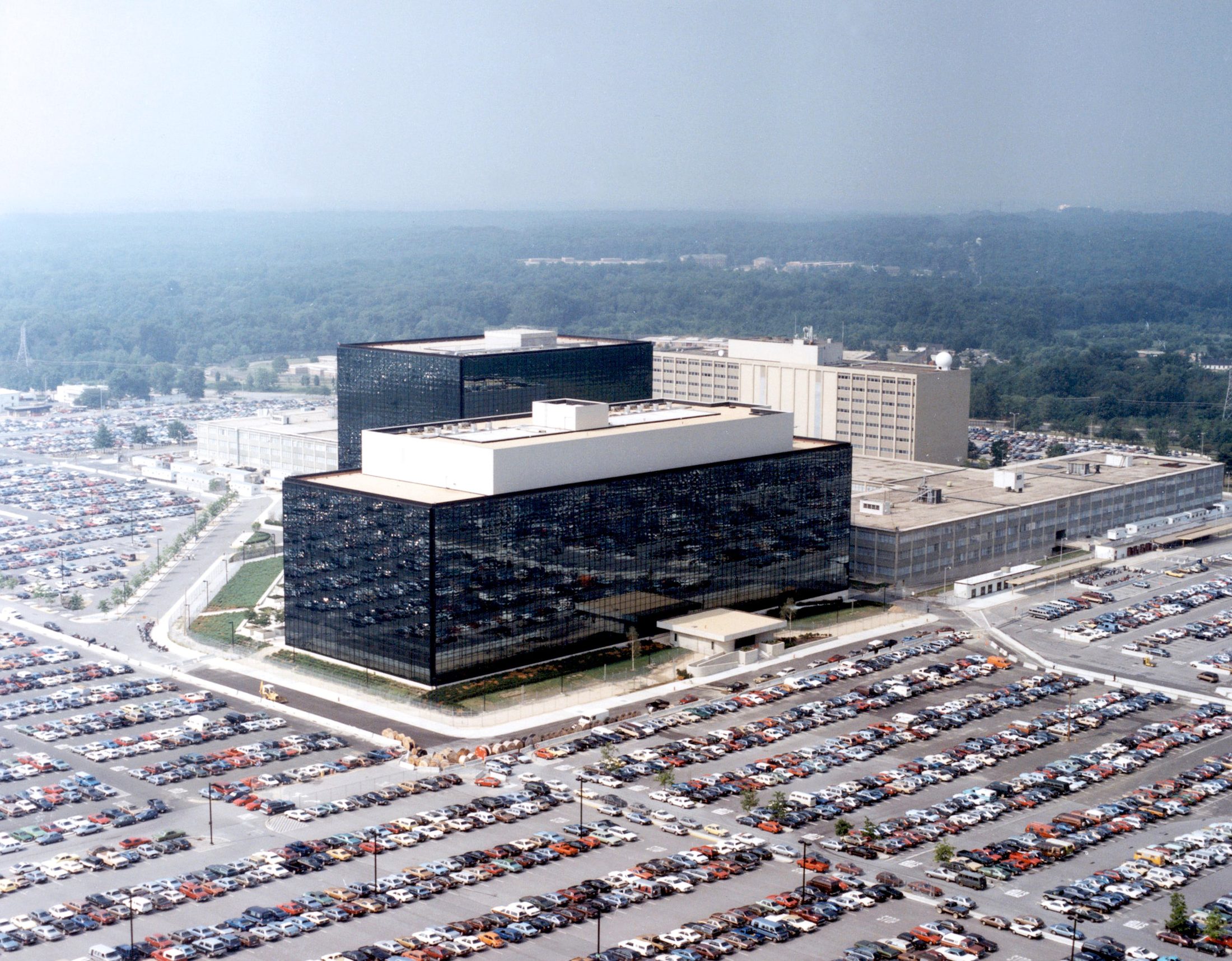
On June 5, 2013, The Guardian published the first of a series of stories based on classified documents leaked by Edward Snowden, an NSA contractor — the most significant public disclosure of US government surveillance operations in history. The programs included PRISM (direct NSA access to data from Google, Facebook, Apple, and other servers), Upstream collection (tapping fiber optic cables), bulk collection of phone metadata under Section 215, and XKeyscore, described internally as collecting "nearly everything a user does on the Internet."
The revelations triggered a global debate. Civil liberties organizations celebrated Snowden as a whistleblower; the US government charged him with espionage. Other governments — many of whose leaders, including German Chancellor Angela Merkel, had themselves been surveilled — expressed outrage. The disclosures led directly to the USA FREEDOM Act (2015), which ended bulk phone metadata collection, and to much wider adoption of encryption.
Snowden received asylum in Russia and Russian citizenship in 2022. The debate about his moral status — whistleblower or criminal — has never been resolved, and it surfaces a deeper question: is democratic oversight of intelligence agencies adequate to prevent the kind of overreach he exposed?
The Right to Be Forgotten
One of the most significant developments in digital privacy law began with a mundane complaint. In 2010, Spanish citizen Mario Costeja González asked Google to remove links to a 1998 newspaper article about debt problems long since resolved. Google refused; González complained to Spain's data protection authority. In 2014 the European Court of Justice ruled that individuals may request removal of "inadequate, irrelevant, or no longer relevant" information from search results — now GDPR Article 17, the "right to erasure."
Google has since received more than two million removal requests. The case illustrates a genuine tension: permitting people to "erase" past events conflicts with the public's interest in accurate historical information and with press freedom. European courts have generally been more willing to balance privacy against other rights and find in privacy's favor; US courts treat the First Amendment's protection of information as close to absolute. Neither approach fully resolves the tension.
The Data Broker Economy
Dramatic events are what get remembered. But the steadiest pressure on privacy in the 2020s comes from something less cinematic: a quiet industry of intermediaries who buy, merge, score, and resell personal information about people who have never heard of them. If surveillance capitalism describes what platforms do with the data you hand them, the data broker industry describes what happens to it afterward.
Data Broker
A company that collects personal information about individuals it has no direct relationship with — from public records, transactions, apps, and other brokers — and then sells or licenses it to third parties. Because you are not the customer, the ordinary consumer-protection instincts (read the terms, switch providers, complain) have nothing to attach to.
How big is this industry? Nobody outside it knows precisely. Commercial estimates for 2026 cluster around $307–363 billion globally, but they are paywalled reports that disagree with one another by roughly twenty percent and define "data broker" loosely enough to move tens of billions either way. The measurement failure is the instructive part: an industry whose business is knowing things about people cannot be measured, from outside, to better than a fifth of its own size. That opacity is not a footnote to the privacy problem; it is part of it.
Public registries give a firmer, if partial, picture. A handful of US states require brokers to register, and California's listed a record 581 in June 2026 — though the Privacy Rights Clearinghouse, pooling five state registries, found hundreds listed in one state and missing from another, so non-registration looks common rather than exceptional. The profiles can be extraordinarily detailed: Acxiom — a unit of Omnicom, and not the same company as LiveRamp, its renamed former parent — advertises more than 1,500 attributes per US consumer.
Regulation has moved in two directions at once. California's DELETE Act created DROP (Delete Request and Opt-out Platform), where one deletion request binds every registered broker; brokers must begin processing requests on 1 August 2026. Compliance is poor: a 2026 study, "Privacy Without Remedy," found only about 9% of the 522 registered brokers fully met the Act's transparency requirements. Federal movement went backward: a December 2024 Consumer Financial Protection Bureau proposal would have treated many brokers as consumer reporting agencies under the Fair Credit Reporting Act, but it was withdrawn in May 2025, and no federal rule is in effect.
The result is a patchwork familiar from the earlier history in this chapter: technology moves, one jurisdiction responds, another declines to, and the gap becomes a business model. It is also a clean illustration of Nissenbaum's point. Almost nothing a broker holds is secret — your address is public, your purchases were shared willingly with a store, your location was handed to a weather app. The violation is in the flow, not the fact.
Thought Questions
- Reconstruct your data trail for a single ordinary day. Which of those records have probably already been sold to someone you have never heard of?
- Make the strongest case for data brokers. Credit scoring, fraud detection, and locating missing persons all depend on aggregating information about people who did not individually consent. Where does the legitimate version end?
- California regulates brokers; the federal government withdrew its proposed rule. Is state-by-state regulation workable for a national industry, or does it mainly reward brokers willing to ignore the strictest state?
Part III: Surveillance in Authoritarian States
The relationship between surveillance and political power takes very different forms across regime types. In authoritarian states, surveillance is an instrument of social control — identifying and suppressing political opposition, enforcing ideological conformity, and punishing dissent before it can organize. Understanding these systems, and the new capabilities information technology gives them, is essential context for evaluating surveillance in democracies.
Key Thinker
Michel Foucault (1926–1984)
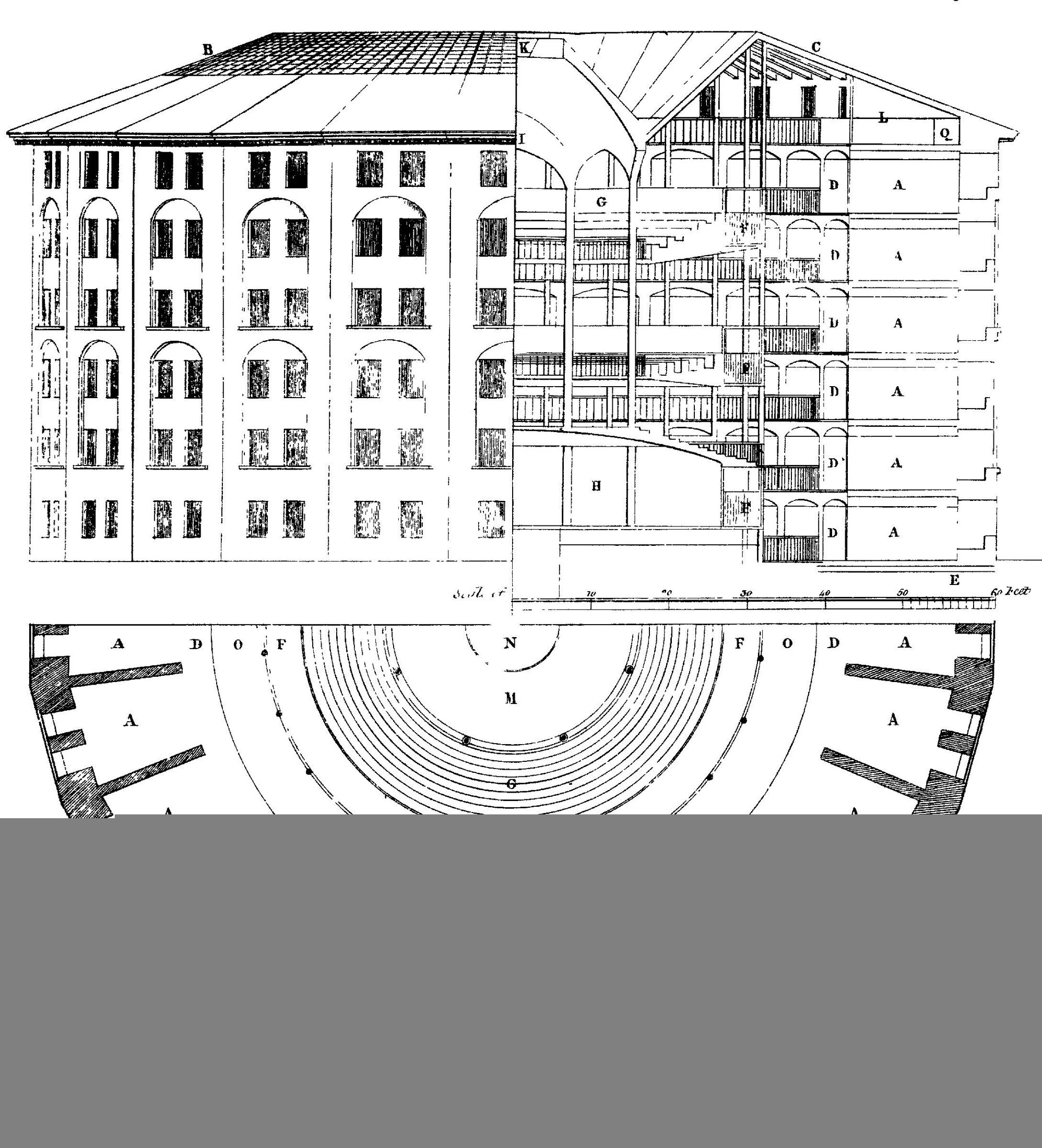
Michel Foucault was a French philosopher and historian whose analyses of power, knowledge, and social institutions transformed how scholars think about discipline and control. His 1975 Discipline and Punish contains the most influential philosophical analysis of surveillance in modern thought, built around Jeremy Bentham's 1791 prison design: the Panopticon.
Bentham's Panopticon was a circular prison with a central watchtower, designed so a single guard could observe every prisoner at any moment — while no prisoner could tell whether he was actually being watched. Its genius was not physical constraint but the psychological kind: the prisoner who cannot tell whether he is watched must behave as if he always is. The external gaze becomes internal self-regulation — the chilling effect, behavior modified not by coercion but by the mere possibility of observation.
Foucault's insight raises an uncomfortable question about social media: platforms where users are simultaneously observers and observed, where visibility is rewarded and privacy suspect, may function as a voluntary panopticon — one we build ourselves.
China: The World's Most Comprehensive Surveillance State
China has built what many analysts describe as the most comprehensive surveillance infrastructure in human history: an estimated 600–700 million CCTV cameras nationwide (roughly one for every two people), facial recognition able to identify individuals in crowds, mandatory real-name registration for internet access, phone service, and transit, and the "Great Firewall" blocking foreign platforms including Google, Facebook, and major news organizations.
| System | Function | Scale |
|---|---|---|
| Skynet / Sharp Eyes | Urban camera network with AI recognition | 600M+ cameras nationwide |
| Golden Shield | Database integration across agencies | 1.4 billion citizens covered |
| Great Firewall | Internet censorship and content filtering | All internet traffic |
| "Social Credit" programs | Court blacklists, regulatory records, local pilot schemes | Blacklists national; point-scoring local and mostly discontinued |
| IJOP | Predictive "suspicion" scoring in Xinjiang | ~12M Uyghur Muslims |
The "Social Credit System" deserves a careful word, because the version that circulates in Western media is largely a misconception — a costly one, since it makes the real system harder to see. The familiar picture is a single national algorithm scoring every citizen, rising when they volunteer and falling when they jaywalk. No such unified score exists nationally. Researchers who read the underlying Chinese-language policy documents — Jeremy Daum of Yale's Paul Tsai China Center and analysts at the Mercator Institute for China Studies among them — describe something messier.
What exists is a patchwork of three loosely related things. First, corporate pilots: voluntary commercial products such as Ant Financial's Sesame Credit, closer to a loyalty program than a citizenship rating; the central bank declined to license these firms as credit-reporting agencies, and several were discontinued. Second, and most consequentially, court judgment-defaulter blacklists — public lists of people who lost a lawsuit and refused to comply. This is where the reported travel bans actually come from: a named individual can be barred from plane or rail tickets, by court order, for a documented reason. Third, regulatory records, mostly concerning companies. Some municipalities ran point-scoring pilots, a few producing the billboard-shaming stories that traveled abroad; most were scaled back or abandoned.
The corrective is not reassurance: China's surveillance apparatus is genuinely vast, as the next section shows. The frightening part is the cameras, the databases, the real-name registration, and the discretionary power to blacklist — not a sci-fi scoreboard. Attributing the harm to a system that does not exist makes it easier to dismiss when the story is corrected, and lets Western readers file the problem as something foreign. The state's actual theory of governance is more mundane and more portable: visible, permanent, cross-linked records of past conduct will make people behave.
Case Study
Xinjiang and the Uyghurs: Surveillance-Enabled Persecution
The Xinjiang Uyghur Autonomous Region is home to approximately 12 million Uyghur Muslims and other ethnic minorities. Beginning around 2017, the Chinese government dramatically escalated surveillance and detention there, in what it describes as counter-terrorism and "vocational training." International investigations — leaked government documents, satellite imagery, survivor testimony — have documented the detention of over a million people in facilities detainees describe as prisons, not schools.
The infrastructure deployed there is qualitatively more intensive than even China's national systems. In some areas checkpoints appear every hundred meters; residents must install mandatory smartphone apps and submit to DNA collection. The IJOP (Integrated Joint Operations Platform) flags residents as "suspicious" for behaviors including praying, avoiding alcohol, traveling abroad, or contacting foreign nationals. Facial recognition cameras are linked to databases that identify ethnicity as well as identity.
The international response has been significant: the United States has sanctioned Hikvision, Dahua, and other surveillance companies, and multiple governments — the US, UK, Canada, the European Parliament — have formally characterized the situation as genocide or crimes against humanity. Xinjiang is the clearest contemporary example of this chapter's thesis: surveillance technology deployed without legal or democratic constraint enables persecution at a scale previously impossible.
Other Authoritarian Surveillance Systems
China's system is the most extensive but not unique. Russia operates SORM (System of Operative-Investigative Measures), which requires internet service providers to install FSB monitoring equipment giving real-time access to all communications without judicial warrant. Moscow alone has over 200,000 facial recognition cameras. Since the 2022 invasion of Ukraine, spreading "false information" about the military carries a 15-year prison sentence, enforced in part through digital monitoring.
Other authoritarian governments have achieved comparable capabilities not by building their own systems but by buying commercial spyware. The most notorious example is Pegasus.
Case Study
The Pegasus Spyware Scandal (2021)
Pegasus is spyware developed by the Israeli company NSO Group and marketed to governments for counter-terrorism and law enforcement. Once installed on a target's smartphone, it can read all messages, calls, emails, and files, activate the camera and microphone, and track location in real time — and it can infect devices via "zero-click" exploits requiring no action from the target, not even clicking a link.
In July 2021, a consortium of seventeen media organizations published findings from the Pegasus Project, based on a leaked list of 50,000+ phone numbers targeted or selected for surveillance. The targets included 180 journalists in twenty countries, heads of state (among them French President Emmanuel Macron), human rights activists, lawyers, and opposition politicians. The phone of Hatice Cengiz, fiancée of murdered Washington Post journalist Jamal Khashoggi, was infected days after his killing.
NSO maintained that Pegasus was sold only to vetted government customers for legitimate purposes — a claim the Pegasus Project evidence thoroughly undermined. The US Commerce Department added NSO to its export blacklist in November 2021. The scandal illustrated a structural problem: the commercial spyware market lets governments without intelligence capabilities of their own acquire tools for targeting dissidents and journalists, and the sellers have limited ability or incentive to police their use.
Exporting Authoritarianism
A final dimension deserves attention: export. Chinese companies — Huawei, Hikvision, SenseTime, and others — have installed surveillance infrastructure in over a hundred countries through "Safe City" projects bundling cameras, AI analytics, and network equipment. Recipients include Zimbabwe, Venezuela, Ecuador, Pakistan, the Philippines, and dozens of African nations. China also trains foreign officials in "internet management."
Critics argue this transfer enables local authoritarianism, potentially lets data flow back to Beijing, and normalizes mass surveillance as a model of governance. Proponents answer that urban surveillance reduces crime and that developing countries are entitled to the same security tools wealthy nations have. The debate tracks a deeper question: when a technology is neutral in itself but its primary documented use is repression, what obligations do manufacturers and exporters have?
Thought Questions
- The unified Chinese "citizen score" is largely a Western invention; the court blacklists and camera networks are entirely real. Why did the fictional version travel further than the documented one?
- Make the strongest case for Safe City exports: that developing countries are entitled to the same public-safety infrastructure wealthy nations have, and that refusing to sell is paternalism. Where does that argument break down?
- Every capability described in this section also exists in democracies. What is doing the work of keeping them different — the technology, the law, the courts, the press, or something else?
Part IV: Surveillance Debates in Liberal Democracies
Liberal democracies face a distinctive challenge. The authoritarian cases above involve relatively clear moral failures — systems designed to suppress political dissent. But what about surveillance in societies with free elections, independent courts, and constitutional rights? Here the analysis is genuinely harder. Governments have legitimate interests in preventing terrorism and protecting public safety. The question is whether surveillance serves those interests — and at what cost to the freedoms that make democratic life worth living.
The Core Tension: Security vs. Liberty — or Something Else?
The standard framing pits security against liberty, as if more of one necessarily means less of the other. But privacy advocates argue this is a false dichotomy: privacy is itself a component of security, protecting individuals against abuse of power. The choice, on this view, is not between security and liberty but between different accounts of what security means and who it protects.
Too many wrongly characterize the debate as "security versus privacy." The real choice is liberty versus control.
Security technologist Bruce Schneier's reframing is worth taking seriously rather than treating as a slogan. Locking your front door is a security measure and a privacy measure at once; so is encrypting a message. What "security versus privacy" smuggles in is a particular kind of security — the state's ability to see. His alternative asks: after a surveillance program is built, who has more power over whom than before?
The Case for Surveillance
Proponents argue that surveillance is necessary for public safety. Consider the central argument carefully.
What's the Argument?
The Deterrence Argument for Surveillance
- Deterring crime protects public safety, and public safety is a core legitimate government interest.
- Surveillance deters crime: people are less likely to offend when they know they are watched.
- If surveillance deters crime, and deterring crime is a legitimate government interest, then surveillance is justified.
Objection
Premise 2 is empirically weak. Studies of CCTV deterrence are mixed: a 2019 meta-analysis found cameras reduced vehicle crime in parking lots but showed "no significant effect" on violent crime, and determined criminals adapt rather than desist. Premise 3 assumes proportionality: even if surveillance provides some benefit, the argument doesn't establish that the benefit outweighs the costs — chilling effects on speech and assembly, mission creep, abuse by future governments, and corroded trust between citizens and state.
The Case Against Surveillance
Critics of mass surveillance argue it threatens not just privacy but the very conditions of free political life.
What's the Argument?
The Chilling Effects Argument Against Surveillance
- A free society requires that citizens be able to speak, associate, and explore ideas without fear of retaliation.
- When people believe they might be watched, they self-censor — avoiding controversial speech, associations, and searches, even legal ones. (This is the "chilling effect.")
- Mass surveillance means people reasonably believe they are always potentially watched.
Supporting argument
The chilling effect is not hypothetical; it has been measured. In a November 2013 survey of more than 520 American writers, PEN America found that 28% had curtailed or avoided social media because of surveillance concerns, 24% had avoided certain topics in phone or email conversations, and 16% had avoided writing or speaking about a particular subject altogether . The legal scholar Jon Penney, studying Wikipedia traffic, found a lasting drop in views of terrorism-related articles after the Snowden revelations — readers appeared to fear their reading was being logged . Related work on search traffic found similar declines for terms such as "anthrax" and "dirty bomb," words of ordinary professional interest to students and journalists. Surveillance changes behavior even when no one is watching and no one has done anything wrong.
The "Nothing to Hide" Argument — Examined
The most common defense of surveillance in everyday conversation is the "nothing to hide" argument: if you're not doing anything wrong, you have nothing to fear from being watched. It earns a fuller pass here, because a weak argument that almost everyone finds convincing does more work in the world than a good one nobody uses. Set out in standard form, its failures are easy to see.
What's the Argument?
The "Nothing to Hide" Argument
- Surveillance only harms people who have something to hide.
- Law-abiding citizens have nothing to hide.
- Therefore, law-abiding citizens are not harmed by surveillance.
Objection
The argument fails, and it fails in five distinct ways that are worth keeping separate.
- Chilling effects. Premise 1 assumes surveillance only touches the guilty. But being watched changes what innocent people do. Add wrongful identification, mission creep, and the standing potential for abuse, and the harm to the blameless is substantial.
- Aggregation. Individually innocuous data points combine into profiles far more revealing than any single item. Daniel Solove argues this is where most of the real damage happens, precisely because no single disclosure looks like a violation .
- Contextual integrity. Premise 2 treats information as either secret or not. Nissenbaum's point applies directly: what is appropriate in one setting is a violation in another. The pharmacist may know your prescriptions; your landlord may not.
- The static-law assumption. The argument silently assumes that what is legal today will be legal tomorrow. Being gay was a criminal offense in England and Wales until 1967 — Alan Turing was prosecuted in 1952 — and in a number of US states until Lawrence v. Texas (2003); interracial marriage was illegal in sixteen states until Loving v. Virginia (1967); abortion was a federally protected right until 2022. Data collected today about lawful conduct becomes evidence under a later government with a different list of crimes.
- Unequal distribution. Surveillance is not spread evenly. Its weight falls hardest on people already subject to official attention — immigrants, welfare recipients, residents of heavily policed neighborhoods, political and religious minorities. Someone insulated from that attention who says "I have nothing to hide" is describing a social position, not making an argument.
Two features deserve emphasis. First, the objections are independent: someone unmoved by chilling effects still has to answer aggregation, and someone untroubled by aggregation still has to answer the static-law assumption. Defenders often rebut one and treat the case as answered. Second, even granting both premises, the conclusion would not follow. That you are not harmed by a practice is no reason to think it acceptable; it is a reason to find out who is. "Nothing to hide" is an argument about the speaker, not about surveillance.
Thought Questions
- Of the five objections, which is strongest, and which would be least persuasive to someone who sincerely believes they have nothing to hide? Why the gap?
- Steelman the argument. Is there a version of "nothing to hide" that survives these objections — perhaps one restricted to warrant-based, judicially supervised surveillance rather than bulk collection?
- Is there anything you do legally today that you would not want documented if the rules changed? Does answering honestly change how you weigh present-day data collection?
Facial Recognition and Predictive Policing
Two surveillance technologies have become particularly contested in democratic societies: facial recognition and predictive policing. Both promise significant benefits to law enforcement. Both raise profound concerns about accuracy, bias, and accountability.
Case Study
Clearview AI: The Facial Recognition Database (2020–2026)
Clearview AI built a facial recognition product by scraping photographs from social media and public websites without permission. When journalists first exposed the company in January 2020, the database held about 3 billion images; federal contracting documents in 2025–26 describe roughly 50 billion. Its product lets a police officer identify virtually anyone from a single photograph — a capability that had belonged only to national intelligence agencies. By 2020, more than 2,400 US law enforcement agencies were using it, often without authorization from their own departments. Its defense throughout has been that scraping public photographs is protected expression.
Abroad, the legal response has been vigorous and largely unenforceable. Regulators fined the company €30.5 million in the Netherlands and €20 million each in France, Italy, and Greece; the UK's Information Commissioner imposed £7.5 million. Clearview has largely not paid, and does not engage with European regulators at all, keeping no European establishment, assets, or customers to lose. What is a fundamental right worth against a firm that can simply decline to answer the letter?
American law has bitten harder, if erratically. An ACLU suit under Illinois's Biometric Information Privacy Act ended in 2022 with Clearview barred from selling its database to most private businesses nationwide. A parallel class action produced an unusual settlement — no cash, but a roughly 23% equity stake in the company. A district court approved it in March 2025; on 13 July 2026 the Seventh Circuit vacated that approval on procedural grounds, while pointedly declining to call payment in equity inherently unfair. The case is open again, and the company has pivoted to federal contracts with ICE, Customs and Border Protection, and the US Army.
Clearview crystallizes a broader debate. Facial recognition in public potentially eliminates anonymity in public life — walking down a street without being identified, long assumed as a background condition of free movement. Once any face in any footage can be identified, the practical distinction between private and public action largely collapses. Error rates are also significantly higher for darker skin tones and women.
Predictive policing raises similar concerns in a different register. Place-based systems like PredPol predict where crime will occur; person-based systems predict who will commit or suffer it. Both face a fundamental problem: sending more police to predicted hotspots produces more arrests there, which feeds the model, which predicts still more crime there — a feedback loop that amplifies existing enforcement patterns, including any racial or socioeconomic bias in the historical data. The LAPD terminated PredPol in 2020 after investigations into its disparate impact on communities of color.
Frameworks for Democratic Surveillance
If the question is not whether surveillance is ever legitimate — most people accept that it is, under appropriate conditions — but when and under what constraints, what principles should govern it? Scholars and policymakers have converged on several requirements.
| Principle | What It Requires | Why It Matters |
|---|---|---|
| Judicial oversight | Warrants required for targeted surveillance | Prevents executive branch self-authorization |
| Transparency | Public must know what surveillance systems exist | Democratic accountability requires knowledge |
| Purpose limitation | Data collected for one purpose cannot be repurposed | Prevents mission creep |
| Minimization | Collect only what is necessary for the stated purpose | Limits collateral privacy harms |
| Retention limits | Data must be deleted after a defined period | Reduces future abuse potential |
| Audit trails | Record who accesses what data, when | Detects and deters misuse |
| Accountability | Real consequences for unauthorized access or misuse | Enforcement without consequences is theater |
| Sunset clauses | Surveillance programs expire without reauthorization | Prevents permanent emergency powers |
These principles do not resolve every case; they provide a framework for evaluating specific proposals. The post-9/11 NSA programs revealed by Snowden violated most of them: bulk collection exceeded minimization; the FISA court operated in secret, compromising transparency; programs expanded beyond their original authorization. The same analysis applies to facial recognition deployments, workplace monitoring, or data broker practices.
Surveillance "tensions" — individual versus collective, present versus future, transparency versus privacy, innovation versus protection — cannot be permanently resolved. They must be navigated case by case, in light of specific technologies, threats, and political contexts. The goal of democratic oversight is not a final answer but a process of navigation that stays accountable, transparent, and subject to revision.
Thought Questions
- Clearview AI has been fined tens of millions of euros by four European regulators and has largely ignored them. If a right cannot be enforced against a company that keeps no assets in your jurisdiction, is it still a right? What tools would you be willing to use instead?
- Would you accept a facial recognition system that was demonstrably accurate across all demographic groups? If not, what was actually doing the work in your objection?
- The eight principles above are mostly procedural. Are there surveillance technologies that should be prohibited categorically, regardless of safeguards? What would your criteria be?
Summary
This chapter has traced privacy from its philosophical foundations through its transformation by successive waves of information technology, to the challenges posed by surveillance capitalism, data brokers, authoritarian states, and democracies navigating the tension between security and liberty. Privacy is neither a simple right nor a minor interest: it is a condition for autonomy, intimacy, democracy, and the very possibility of being a self. The frameworks reviewed here — contextual integrity, Fair Information Principles, GDPR, democratic surveillance principles — are imperfect but important tools.
Key Points
- Contextual integrity (Helen Nissenbaum): privacy is not about secrecy but about appropriate information flows, and a violation occurs when information moves to a context where it does not belong.
- Instrumental arguments hold that privacy serves autonomy, intimacy, democracy, security, and power balance, so even someone skeptical of privacy as an end in itself should value what it makes possible.
- Warren and Brandeis (1890) borrowed Judge Thomas Cooley's phrase "the right to be let alone" and made it famous, launching modern privacy law in response to invasive photography — a pattern repeated with every later information revolution.
- The US approach is sectoral (HIPAA, FERPA, COPPA) with no comprehensive federal protection for personal data held by private companies, while the EU's GDPR is the ambitious alternative, with fines up to 4% of global revenue.
- Surveillance capitalism (Shoshana Zuboff): free internet services treat human experience as raw material, harvesting "behavioral surplus" into prediction products that go beyond collection to behavioral modification at scale.
- The Panopticon (Bentham/Foucault): the mere possibility of being observed is enough to change behavior — the chilling effect that makes mass surveillance a threat to free expression even when no one is arrested.
- Data brokers resell personal information about people they have no relationship with, in an industry that cannot be measured to better than about a fifth of its own size: California's DROP deletion platform binds registered brokers from August 2026, while the proposed federal Fair Credit Reporting Act rule was withdrawn in May 2025.
- Authoritarian surveillance (China, Russia, others) combines cameras, databases, AI, and spyware into social control, though the Western picture of a unified Chinese "citizen score" is largely a misconception — court blacklists, regulatory records, and mostly abandoned local pilots are the reality, so the surveillance is real while the score mostly is not.
- The "nothing to hide" argument fails in five separable ways: chilling effects on the innocent, aggregation of innocuous data into sensitive profiles (Solove), contextual integrity, the false assumption that today's laws are permanent, and the unequal distribution of surveillance.
- Democratic surveillance requires judicial oversight, transparency, purpose limitation, minimization, retention limits, audit trails, accountability, and sunset clauses — a framework for navigating the security-liberty tension rather than resolving it.