Principles, Theories & Moral Reasoning
Lecture 1 · Part B — Ethical Theories as Lenses
0.1 Before We Start
Plague reached Sicily in the autumn of 1347 and the Italian mainland that winter, then moved north city by city. Florence and Milan both knew it was coming, and both already believed it travelled with the sick, their belongings, and travellers from infected towns.
Florence did not act until the plague was already inside its walls, and could not enforce what it then ordered. It buried half its people, and possibly far more.
Milan sealed its gates early. When plague appeared in three houses, the ruling archbishop had them walled up with the occupants still inside, the healthy along with the sick and the dead. Milan came through comparatively lightly.
- You advise one of these cities before the plague arrives. Which policy do you adopt?
- You live in Milan and wake with a fever. Do you tell anyone?
- What would a good neighbor do, in either city?
Sources and caveats. The walling-up is Barbara Tuchman’s account, which credits Archbishop Giovanni Visconti; she draws no causal conclusion from it, writing only that “whether or not owing to his promptitude, Milan escaped lightly in the roll of the dead” (Tuchman 1978). Milan’s escape was noticed at the time: the Florentine chronicler Matteo Villani recorded that the pestilence took the whole peninsula “with the exception of Milan and some Alpine districts of northern Lombardy” (Gasquet 1893). How much of that was policy, and how much Milan’s inland position and thinner sea trade, is unsettled. Florence was not idle, but it was late: its measures came in April 1348, after its first cases in March, and included a 500-lire fine on arrivals from Genoa and Pisa, a ban on selling the clothing of the sick, street clearing, and a magistracy with emergency powers (Henderson 1992). Estimates of Florentine mortality range from about half to four-fifths; the city’s population is usually put near 110,000 before the plague and about 50,000 by 1351. Benedictow is the standard survey of the mortality evidence (Benedictow 2021).
0.2 Three Kinds of Reason
Each of those questions asks for a different kind of reason:
- How it turns out. A policy is judged by its results, meaning how many people lived under it. Milan’s death toll was lower than Florence’s.
- What you owe. Some acts are wrong whatever they achieve. Sealing healthy people into a house uses them to protect other people.
- Who you would be. The question is what a decent person does. In Milan, warning your neighbors and shielding your own family pull in opposite directions.
The three do not always agree. Which kind of reason a case turns on is often disputed, and here the dispute starts with whether Milan’s policy is the reason Milan survived.
0.3 Bridge from Part A
In Part A we asked: what are the four principles, and how do you read a moral argument? Part B asks:
Where do the principles come from — and how do we weigh them when they conflict?
By the end of Part B, you will be able to:
- State the core commitment of utilitarian, Kantian, and character/tradition ethics (virtue, care, Confucian, natural law)
- Explain how each grounds or prioritizes the four principles differently
- Trace one contemporary debate — Singer versus O’Neill and Kamm — across global obligation, animals, and the end of life
- Apply at least two lenses to one clinical case and show they diverge
1 Why Theory?
The four principles tell you what to weigh. Theories tell you how.
1.1 What Theories Do
The four principles — autonomy, beneficence, non-maleficence, justice — give us a shared vocabulary. But they do not, by themselves, tell us which principle to prioritize when they conflict (Beauchamp and Childress 2019).
Ethical theories fill that gap. Think of them as lenses:
- Each focuses on something real
- Each has blind spots
- No single lens sees everything
We will use these lenses throughout the course — not to pick a winner, but to see more of the problem.
1.2 A Roadmap
| Lens | Core question | Key figures |
|---|---|---|
| Utilitarianism | What produces the best outcomes for all affected? | Bentham, Mill; Singer |
| Kantian ethics | What do we owe persons, regardless of outcome? | Kant; O’Neill, Kamm |
| Character & traditions | What kind of person, relationship, and community is good? | Aristotle; Gilligan/Held, Confucius, Aquinas |
The four principles are the shared backdrop all three lenses interpret — differently.
These four theories reappear in almost every chapter that follows. Abortion, end of life, justice — each one sets them pulling in different directions. Noticing which theory is doing the work in an argument is half of reading it well.
2 Utilitarianism
The right action produces the greatest good for the greatest number.
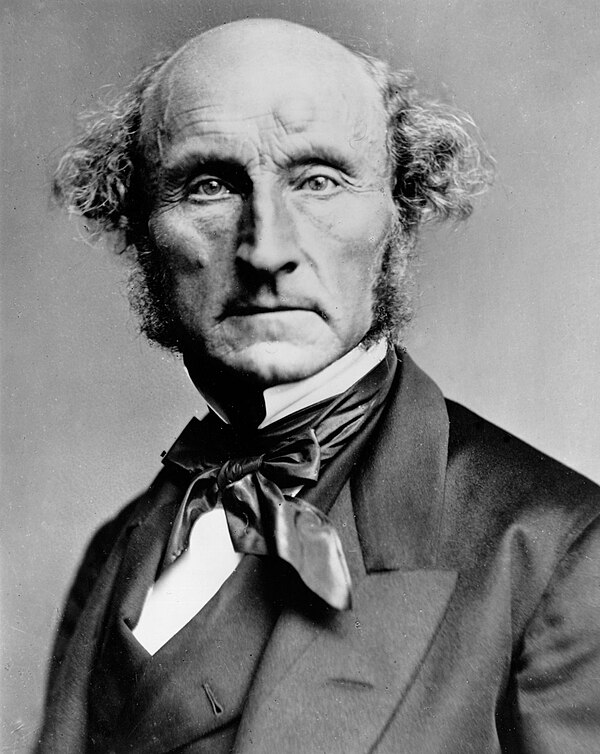
2.1 Mill States the Principle
“The creed which accepts as the foundation of morals, Utility, or the Greatest Happiness Principle, holds that actions are right in proportion as they tend to promote happiness, wrong as they tend to produce the reverse of happiness. By happiness is intended pleasure, and the absence of pain; by unhappiness, pain, and the privation of pleasure.”
J. S. Mill, Utilitarianism (1863) (Mill 1863)
2.2 The Greatest Happiness Principle
Utilitarianism judges actions entirely by their consequences:
- What matters is welfare — happiness, well-being, the absence of suffering
- All individuals count equally; no one gets extra weight
- The morally required action is the one that maximizes total welfare
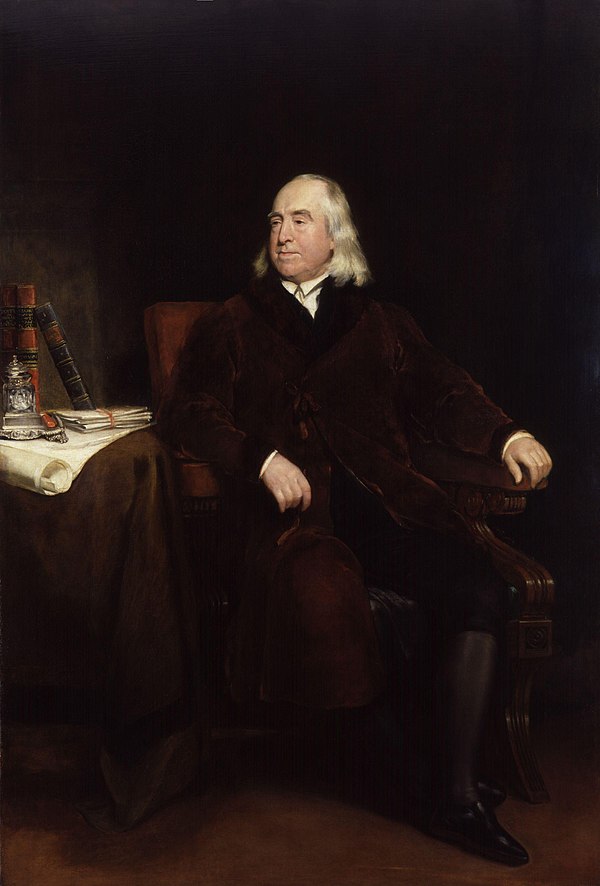
Bentham called this the hedonic calculus — weigh the pleasures and pains produced, add them up, choose the highest score (Bentham 1789).
2.3 Utilitarianism and the Four Principles
Beneficence is central — acting to maximize welfare just is acting beneficently.
Justice emerges from impartiality: each person counts as one, so unfair distributions that reduce total welfare are wrong.
Autonomy is valued instrumentally — respecting autonomy usually maximizes welfare — but can be overridden when it doesn’t.
Non-Maleficence is captured under the harm side of the ledger.
Note
The tension. A strict utilitarian could justify deceiving a patient if the deception produces better outcomes. Most clinicians resist this — which is why other theories matter.
2.4 Utilitarianism: Weighing Harms and Benefits
2.5 Thought Question
A city has 10 ventilators and 15 patients who need one to survive. Five of the fifteen have a much higher probability of surviving with ventilator support.
A utilitarian protocol would allocate ventilators to maximize lives saved — which likely means the five highest-probability patients get priority.
- Is that fair to the other ten patients?
- Does it matter why some patients have lower survival odds — age, disability, underlying illness?
- What would the principle of justice say that utilitarianism might miss?
2.6 After You’ve Discussed
Note
The utilitarian reply. A sophisticated utilitarian can say: the protocol maximizes welfare across the group, which is what justice requires.
The critique is that it treats some lives as worth less, and that the reasons behind lower survival odds (disability, chronic illness) are often tied to existing inequities. We will return to this when we take up public health ethics and the just allocation of care.
3 Utilitarianism in Practice: Peter Singer
3.1 Utilitarianism, Followed All the Way
- Peter Singer is the most influential living utilitarian, known for following the theory’s logic wherever it leads (Singer 2011).
- He defends preference utilitarianism: an act is right if it best satisfies the preferences of everyone affected, counted impartially.
- His master rule is the principle of equal consideration of interests: like interests get equal weight no matter whose they are.
- Impartiality is literal — your interests get no extra weight for being yours, your family’s, your country’s, or your species’.
- This makes the theory powerful and uncomfortable: it generates strong, sometimes radical, real-world obligations.
3.2 Singer on Global Obligations
The drowning child. You pass a shallow pond where a small child is drowning. Wading in ruins your expensive shoes — obviously you must save her. Singer asks: why is a child dying of a preventable disease overseas any different? (Singer 1972)
- His principle: if we can prevent something very bad without sacrificing anything of comparable importance, we must — and distance does not change that.
- It launched the effective altruism movement: give substantially, where each dollar does the most good.
- The standard pushback is the demandingness objection — strictly applied, it seems to require giving until you are nearly as badly off as those you help.
3.3 Singer on Animals
- In Animal Liberation (1975), Singer extended equal consideration beyond our own species (Singer 1975).
- The morally relevant feature is sentience — the capacity to suffer — not intelligence, language, or species.
- Giving humans’ interests automatic priority over animals’ like interests is speciesism, which he argues is, in form, like racism or sexism.
- This is not the claim that animals and humans are equal in all respects — only that comparable suffering deserves comparable weight.
- On these grounds he judges factory farming and much animal research to be vast, unjustified harm.
3.4 Singer at the Edges of Life
- Singer separates being biologically human from being a person — a self-aware being with preferences about its own future.
- The wrongness of killing then tracks personhood and preferences, not species membership by itself.
- So he holds abortion permissible (an early fetus is not yet a person) and defends voluntary euthanasia.
- Most controversially, he argues that for some severely impaired newborns, ending life may be permissible, given the suffering that is likely to characterize these lives.
Singer matters precisely because he refuses to stop where intuition gets uncomfortable. This is the hinge of the chapter: the next section asks whether “follow the calculation wherever it leads” is the right method at all.
4 Kantian Ethics
Act from duty — treat persons always as ends, never merely as means.
4.1 Kant
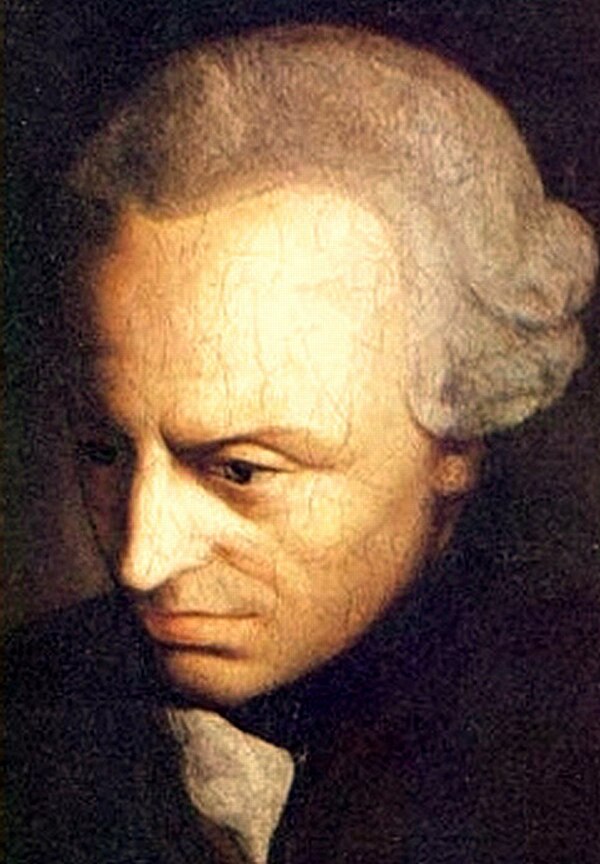
Immanuel Kant (1724–1804) argued that morality is grounded in reason, not consequences.
The key test is his Categorical Imperative — a rule for whether an action is morally permissible, applied before you look at outcomes.
4.2 The Humanity Formulation
The most clinically relevant form of the Categorical Imperative (Kant 1785):
“Now I say: man and generally any rational being exists as an end in himself, not merely as a means to be arbitrarily used by this or that will.… So act as to treat humanity, whether in thine own person or in that of any other, in every case as an end withal, never as means only.”
Kant, Groundwork of the Metaphysic of Morals (1785), trans. T. K. Abbott (Kant 1785)
4.3 What the Formula Demands
- Every person has dignity — an unconditional worth that cannot be weighed against anyone else’s benefit.
- To deceive, manipulate, or coerce a patient is to use them as a mere means, even when the outcome is good.
- Informed consent is therefore not mere policy or paperwork; it is a direct moral requirement.
- A competent patient may decline what is medically best, because respect does not depend on agreeing with the choice.
- The duty has a limit: where rational agency is genuinely impaired, treating someone as an end can require protecting them, not only deferring to them.
4.4 Kantian Ethics and the Four Principles
Autonomy is Kant’s central principle — respecting autonomy is what it means to treat persons as ends.
Non-Maleficence reflects the duty not to harm persons who have inherent dignity.
Beneficence is a genuine duty, but cannot override autonomy — benefiting someone by deceiving them is still wrong.
Justice flows from treating persons equally as ends — no one’s dignity is worth more than another’s.
Note
Contrast with utilitarianism. Kant would say: you must never lie to the Jehovah’s Witness patient about her prognosis to get her to consent, even if lying would save her life.
4.5 Kantian Ethics: Perfect and Imperfect Duties
4.6 Thought Question
A patient with severe depression has been refusing an antidepressant. His psychiatrist suspects the refusal is itself a symptom of the illness — that his depression is preventing him from appreciating how treatment could help him.
- Does the Kantian view help here — or complicate it?
- When, if ever, does treating the illness require overriding the patient’s expressed wishes?
- How is this different from the Jehovah’s Witness case?
4.7 After You’ve Discussed
Note
The Kantian tension. Kant’s framework requires that the patient be capable of rational self-governance for autonomy to apply fully. If the illness itself impairs that capacity, overriding expressed wishes may be consistent with treating him as an end — but this reasoning can also be abused to justify paternalism.
Decision-making capacity assessment is how clinical ethics tries to hold this line carefully.
5 The Nonconsequentialist Reply
5.1 Answering Singer
- If Singer is utilitarianism with the gloves off, the Kantian tradition is the main reply.
- The separateness of persons: people are not interchangeable vessels of welfare, so a serious harm to one is not cancelled by benefits to others.
- Morality includes constraints: using, deceiving, or killing an innocent person can be wrong even when it would maximize good.
- Doing vs. allowing: actively harming someone differs from failing to benefit a stranger — so the “distance and numbers don’t matter” move is contested.
- The reply is not “ignore consequences”; it is “consequences are not the only moral currency.”
5.2 Kantian Ethics and “Just Sign Here”
- A utilitarian can accept a rushed or spun consent if the outcome is good; a Kantian cannot.
- Treating a patient as an end means the consent process must be one a reasonable person could actually trust (O’Neill 2002).
- That rules out manipulation, euphemism, and “technically true” disclosure — even when they would steer the patient toward the better outcome.
- It shifts the question from “did they sign?” to “did we give them what they would need to decide for themselves?”
- Practical upshot: honest disclosure and trustworthy institutions are obligations, not customer service.
5.3 Why You Can’t Harvest One to Save Five
- Five patients will die without organs; one healthy person in the waiting room is a match — the arithmetic says harvest.
- Kantian ethics says no, flatly: a person is not a resource, even when the numbers are overwhelming (Kamm 2013).
- How a harm comes about matters — intending a death differs from foreseeing it, which is why pain relief that may shorten life can still be permissible.
- You also have prerogatives: you need not sacrifice everything to maximize good, so Singer’s unlimited demand is rejected.
- The bedside payoff: some lines — deceiving, using, or killing a patient — hold even when crossing them would help more people.
5.4 Singer vs. Kantian Ethics, Side by Side
| Issue | Singer (preference utilitarian) | Kantian ethics (constraints, dignity) |
|---|---|---|
| Global poverty | Strong duty to give; distance irrelevant; very demanding | A real but bounded duty to aid; owed first to particular others |
| Animals | Equal consideration of like interests; speciesism is a bias | Treatment is still constrained, but duties often track rational agency |
| End of life | Personhood and preferences decide; voluntary euthanasia permissible | Persons have dignity; you may not use or kill a person for net benefit |
| Method | Sum the interests, choose the maximum | Apply constraints first; numbers do not settle everything |
Same cases, different moral currency — which is why we keep both lenses on the table.
6 Character & Traditions
The third lens: not “what rule?” or “what calculation?” but “what kind of person, relationship, and community is good?”
6.1 One Family, Four Traditions
These traditions judge the agent and the relationship, not only the isolated act — but they differ sharply:
- Aristotelian virtue ethics — flourishing through stable, cultivated traits of character.
- Care ethics — morality begins in concrete, dependent relationships; even Beauchamp and Childress list care among the focal virtues (Beauchamp and Childress 2019).
- Confucian ethics — the self is constituted by roles and relationships, refined through lifelong practice (Fan 1999).
- Natural law — reason discerns the basic human goods every life needs, and the duty to pursue them (Gómez-Lobo 2002).
6.2 Aristotle and Eudaimonia
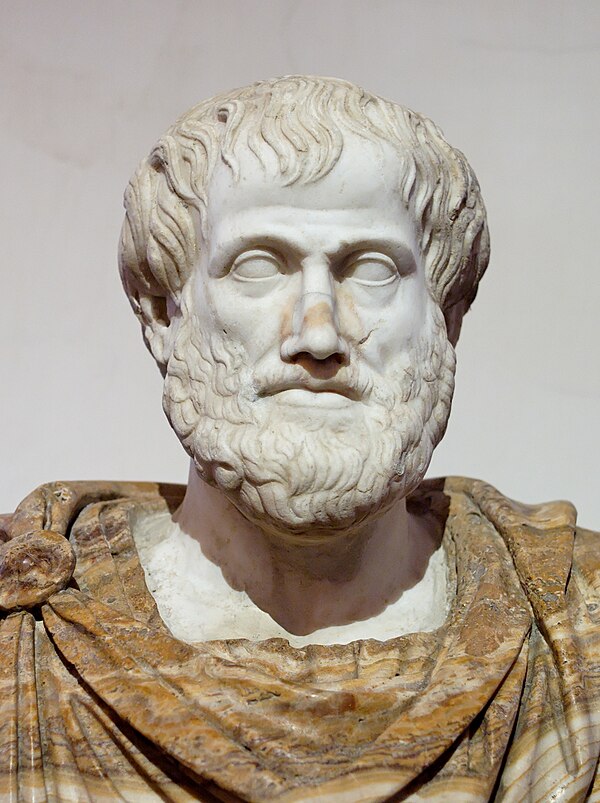
Aristotle asked not “what should I do?” but “what kind of person should I be?” (Aristotle 340 BC)
Eudaimonia — often translated flourishing — is the goal of human life: living and acting in accordance with the virtues of a fully developed human being.
A virtue is a stable character trait — developed through practice — that reliably disposes a person to act and feel well.
6.3 The Virtues of the Good Nurse
Virtue ethics is especially useful in professional ethics, because professions define role-specific excellences.
The ANA Code of Ethics (American Nurses Association 2015) describes the good nurse as someone who embodies:
- Compassion — genuine concern for the patient’s suffering
- Integrity — consistency between values and actions, even under pressure
- Fidelity — keeping commitments made to patients and profession
- Practical wisdom (phronesis) — knowing how to apply general principles to particular situations
These are not policies. They are traits you develop by practicing them.
6.4 Virtue Ethics and the Four Principles
Virtue ethics asks: what would a person of good character do in this situation?
Beneficence — the virtuous clinician genuinely cares about the patient’s good, not just follows protocols.
Non-Maleficence — integrity means honesty about what you can and cannot do.
Autonomy — respect for persons flows from compassion and fidelity, not just rules.
Justice — fairness requires the virtue of impartiality even toward patients you find difficult.
6.5 Virtue Ethics: The Cycle of Character Development
6.6 Gilligan and the Ethics of Care
- Care ethics treats responsiveness — attentiveness, responsibility — as a cultivated trait, like an Aristotelian virtue, not a rule to apply.
- Gilligan (Gilligan 1982): the dominant theories prioritize abstract rules for strangers, and so missed a whole moral “voice.”
- Held (Held 2006) built that into a full account in which relationship and dependency are morally basic.
- Its risk mirrors its strength: relationships can be unequal or controlling, so care still needs justice.
“[T]he moral problem arises from conflicting responsibilities rather than from competing rights.”
— Gilligan, In a Different Voice (1982)

6.7 Care Ethics: The Web of Relationships
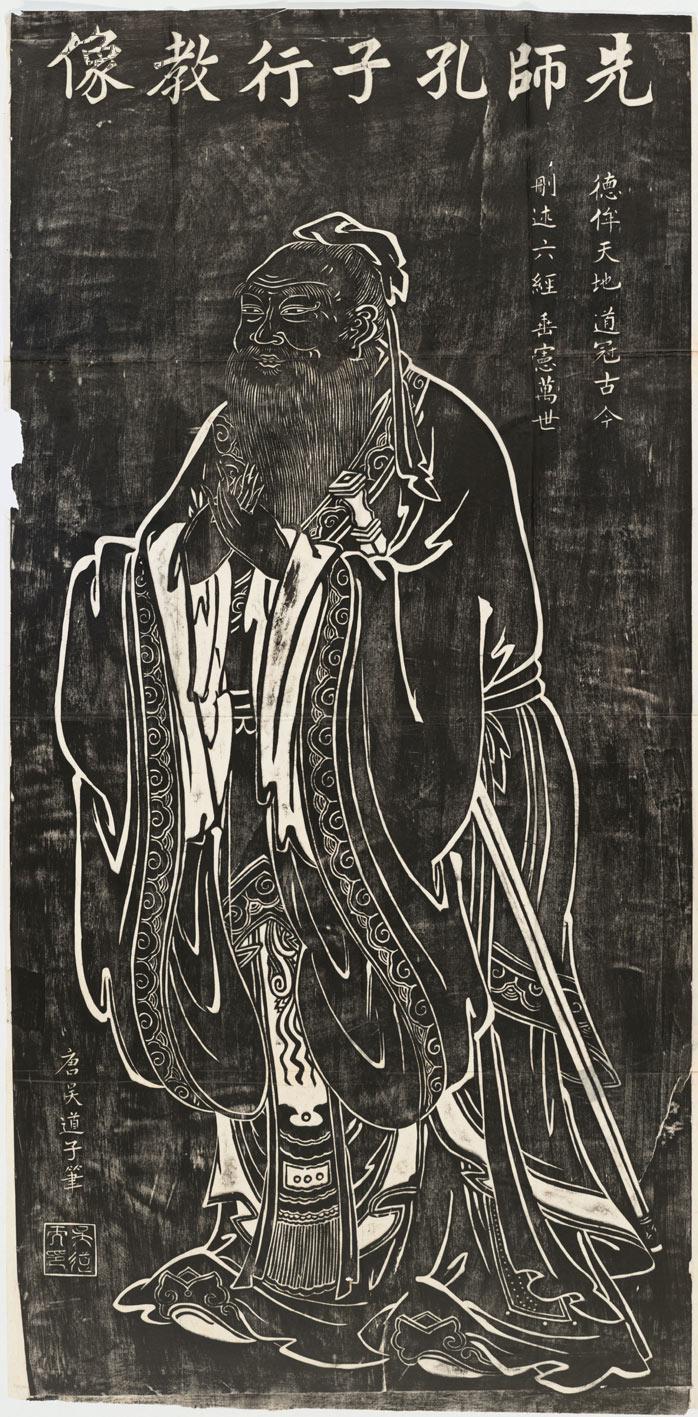
6.8 Confucian Virtue Ethics
- One of the world’s oldest virtue traditions, increasingly important as care globalizes (Fan 1999).
- Ren (benevolence, humaneness) is the central virtue: wholehearted concern for others.
- Li (ritual propriety) governs how that concern is expressed appropriately within each relationship.
- Xiao (filial piety) makes obligations to parents and family morally fundamental, not optional sentiment.
- The self is relational and role-constituted — always someone’s child, parent, or clinician — and the exemplar (junzi) is formed over a lifetime of practice.
6.9 Confucian Ethics in the Clinic
- The Confucian frame changes what “respecting the patient” looks like in practice.
- Decisions are often family-determined: the family, not the solitary patient, is the natural decision unit.
- This can collide with Western informed consent — e.g., a family asking that a grave diagnosis not be told directly to an elder.
- It is not simply paternalism: it expresses xiao and a duty to shield a loved one from a crushing burden.
- So it reframes autonomy as relational rather than individual — a theme that returns when we discuss cross-cultural truth-telling.
6.10 Natural Law
- Rooted in Aristotle and developed by the Catholic theologian Aquinas: reason can read how we ought to live from the goods proper to human nature (Gómez-Lobo 2002).
- Its first principle is to do good and avoid evil: pursue, and never act directly against, the basic human goods.
- Those basic goods include life and health, knowledge, friendship, and reasonable practical judgment.
- Right action respects every basic good — you may not destroy one good simply to promote another.
- It is secular in form (argued from reason and human nature) yet underlies the sanctity-of-life language especially common in Catholic bioethics.
6.11 Natural Law in Bioethics
- Natural law gives bioethics one of its most-used tools: the Doctrine of Double Effect (DDE).
- DDE permits an act with a grave bad side effect if the harm is foreseen but not intended and the good is proportionate.
- Classic case: opioid doses that relieve pain (intended) while possibly hastening death (foreseen) — permissible.
- The same logic shapes Catholic health systems on end-of-life and reproductive care.
- It draws a line utilitarianism rejects and Kant/Kamm rebuild differently — intending harm vs. allowing it; applied later to palliative sedation in end-of-life care.
6.12 Four Strands of Character Ethics
| Strand | Central idea | Key figure(s) | Bioethics payoff |
|---|---|---|---|
| Aristotelian | Flourishing through virtuous character | Aristotle | The virtues of the good clinician |
| Care | Morality begins in relationship | Gilligan, Held | The bedside relationship is not a checklist |
| Confucian | The self is role- and family-constituted | Confucius; Fan | Family-centered decisions; relational autonomy |
| Natural law | Reason discerns basic human goods | Aquinas | Double effect; sanctity-of-life arguments |
6.13 Thought Question
A 78-year-old woman with mild cognitive impairment makes decisions that worry her adult children. She insists on living alone; she sometimes forgets meals; she declines the assisted living facility they have arranged.
- A utilitarian weighs her risk profile and long-term welfare; a Kantian asks about her decision-making capacity; the character lenses ask what a caring daughter, a virtuous clinician, or a filial family would do.
- What do the relationship-centered traditions (care, Confucian) add that the act-focused theories miss?
- Is there anything they might obscure?
6.14 After You’ve Discussed
Note
What the relational lenses add. They center the relationship and her embeddedness in family and community — her story, not just her risk score; the Confucian frame even treats the family as a proper decision-maker.
What they can obscure: a caring family can also be a controlling one, so these lenses still need justice to ask whether the relationships are themselves fair. This is why the four principles are used alongside the theories, not replaced by any single one.
7 Putting It Together
Four lenses. One case. Different things come into view.
Return to the choice between Florence’s policy and Milan’s. Which kind of reason carried the most weight for you, and does it still?
7.1 The Theories as Lenses
| Lens | Foundational commitment | Role of the four principles |
|---|---|---|
| Utilitarianism | Maximize welfare for all affected | Principles are derived — follow them because doing so usually produces the best outcomes |
| Kantian ethics | Respect persons as ends | Principles are duties grounded in rational dignity — especially autonomy |
| Character & traditions | Cultivate good character and right relationship | Principles are expressions of virtue and relationship — wisdom and context tell you how to apply them |
7.2 Which Theory Is Right?
Probably none of them — completely. Each illuminates something the others miss:
- Utilitarianism sees the population and the aggregate — Singer shows how far that reaches.
- Kantian ethics sees the dignity of the individual that cannot be traded away — O’Neill and Kamm rebuild the constraints.
- The character and tradition lenses see the clinician’s virtue, the bedside relationship, and the family and community that abstract rules erase.
The four principles work in part because they are theory-agnostic: a Kantian and a utilitarian can both endorse autonomy, beneficence, non-maleficence, and justice — they just disagree about why and how to weight them.
7.3 Wrapping Up
Bioethics uses a four-principle framework as its shared vocabulary, supported by major ethical theories that answer how to weigh those principles differently. Utilitarianism focuses on outcomes and aggregate welfare — Singer pushes that logic to its hardest conclusions. Kantian ethics focuses on duties and the dignity of persons — O’Neill and Kamm answer Singer by rebuilding moral constraints. The character traditions — virtue, care, Confucian, and natural law — focus on the kind of person, relationship, and community we should sustain. No single theory is correct; used as lenses, they let us see more of what is morally at stake in any clinical situation.
Next, we turn to the history that gave these principles their urgency, and the clinical relationship where they are daily tested.
7.4 Review Questions
Recall
What makes an action right for a utilitarian, for a Kantian, and for a virtue or care ethicist?
Apply
A clinician considers giving a placebo pill without disclosing it to a patient with chronic pain because it may relieve symptoms and seems harmless. How would a utilitarian, a Kantian, and a care or virtue ethicist evaluate that choice?
Debate
Should global-health funding be directed mainly by cost-effectiveness calculations that maximize total benefit, or should relationship-based duties, local priorities, and historical injustice sometimes override that math?
7.5 Key Terms
- Consequentialism — the family of theories on which the rightness of an act depends on its outcomes.
- Utilitarianism — the consequentialist view that the right act maximizes overall well-being.
- Preference utilitarianism — the version that counts the satisfaction of preferences, not pleasure, as the relevant good.
- Principle of equal consideration of interests — like interests count equally, regardless of whose interests they are.
- Speciesism — Singer’s term for giving lower weight to a being’s interests simply because of species membership.
- Person (in Singer’s sense) — a being with self-awareness over time, capable of having preferences about its future.
- Deontology — the family of theories on which some acts are right or wrong independent of consequences.
- Categorical Imperative — Kant’s test: act only on a maxim you could will to be a universal law, and treat humanity always as an end, never merely as a means.
- Virtue ethics — the view that ethics centers on character traits (virtues) rather than rules or outcomes.
- Eudaimonia — Aristotle’s term for human flourishing, the end virtue serves.
- Care ethics — the view that morality is grounded in concrete relationships of care and responsibility, not impartial rules.
7.6 References
American Nurses Association. 2015. Code of Ethics for Nurses with Interpretive Statements. American Nurses Association. https://www.nursingworld.org/coe-view-only.
Aristotle. 340 BC. Nicomachean Ethics.
Beauchamp, Tom L., and James F. Childress. 2019. Principles of Biomedical Ethics. 8th ed. Oxford University Press.
Benedictow, Ole J. 2021. The Complete History of the Black Death. 2nd ed. Boydell Press.
Bentham, Jeremy. 1789. An Introduction to the Principles of Morals and Legislation. T. Payne; Son.
Fan, Ruiping. 1999. Confucian Bioethics. Kluwer Academic Publishers.
Gasquet, Francis Aidan. 1893. The Great Pestilence (a.d. 1348–9), Now Commonly Known as the Black Death. Simpkin Marshall. https://www.gutenberg.org/files/45815/45815-h/45815-h.htm.
Gilligan, Carol. 1982. In a Different Voice: Psychological Theory and Women’s Development. Harvard University Press.
Gómez-Lobo, Alfonso. 2002. Morality and the Human Goods: An Introduction to Natural Law Ethics. Georgetown University Press.
Held, Virginia. 2006. The Ethics of Care: Personal, Political, and Global. Oxford University Press.
Henderson, John. 1992. “The Black Death in Florence: Medical and Communal Responses.” In Death in Towns: Urban Responses to the Dying and the Dead, 100–1600, edited by Steven Bassett. Leicester University Press.
Kamm, Frances M. 2013. Bioethical Prescriptions: To Create, End, Choose, and Improve Lives. Oxford University Press.
Kant, Immanuel. 1785. Groundwork of the Metaphysics of Morals.
Mill, John Stuart. 1863. Utilitarianism. Parker, Son,; Bourn.
O’Neill, Onora. 2002. Autonomy and Trust in Bioethics. Cambridge University Press.
Singer, Peter. 1972. “Famine, Affluence, and Morality.” Philosophy & Public Affairs 1 (3): 229–43.
Singer, Peter. 1975. Animal Liberation. HarperCollins.
Singer, Peter. 2011. Practical Ethics. 3rd ed. Cambridge University Press.
Tuchman, Barbara W. 1978. A Distant Mirror: The Calamitous 14th Century. Alfred A. Knopf.